Preventing Cap Warpage Through Balanced Cooling Circuit Design
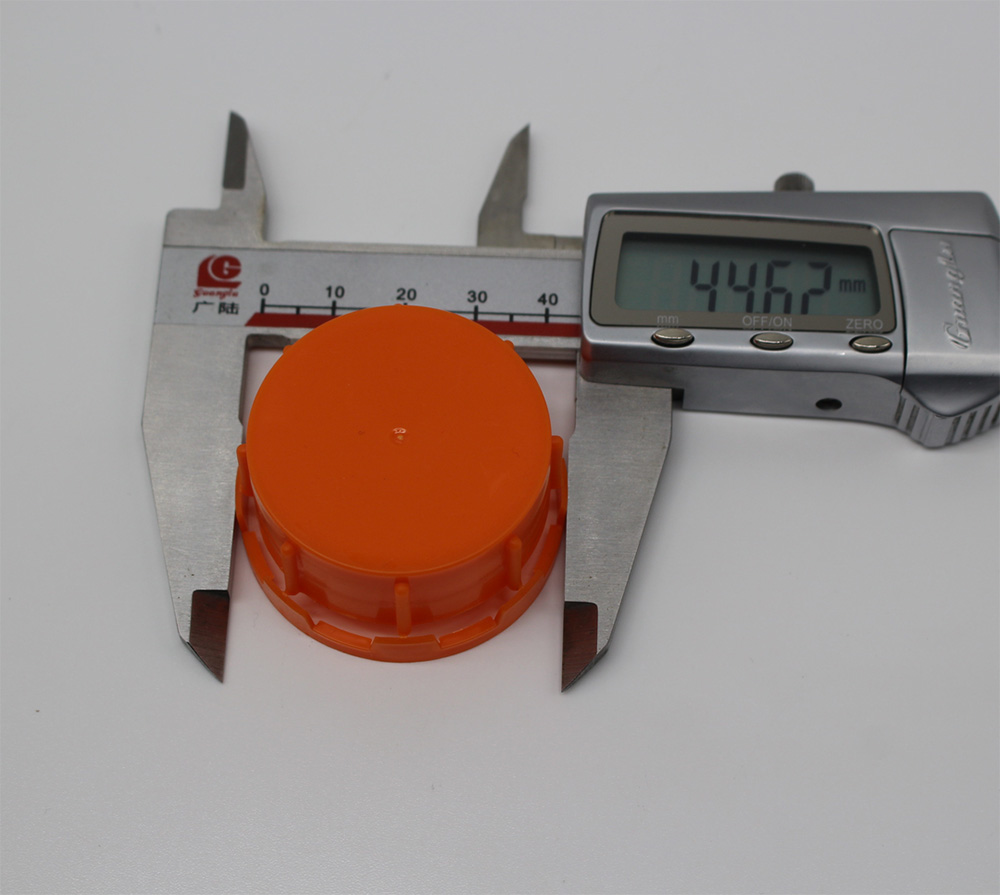
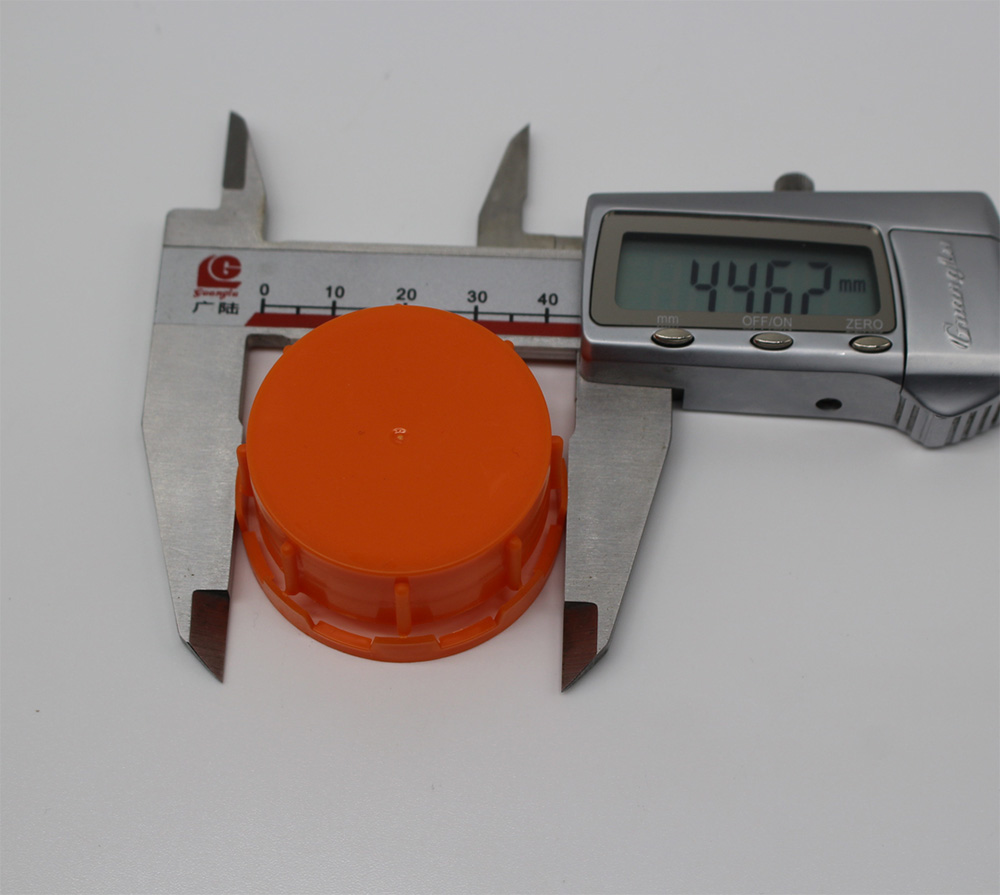
Warpage is one of the most persistent and costly defects in cap injection molding. A cap that rocks on a flat surface, is out-of-round, or has a dished top panel is a cap that will not seal properly, will not apply correct torque, and will not satisfy consumers.
The root cause of warpage is almost always uneven cooling. When different areas of the cap cool at different rates, differential shrinkage creates internal stresses that distort the part. The thicker sections (top panel, gate area) retain heat longer. The thinner sections (TE band, sidewall) cool quickly. The result is a cap that is not flat, not round, and not stable.
Preventing warpage requires balanced cooling. Every area of the cap must cool at the same rate. The cooling circuit design must extract heat uniformly from all areas. This is not achieved by accident—it requires engineering precision.
At Shuanghao, we have developed systematic methods for designing balanced cooling circuits that prevent cap warpage. This article reveals our approach.
Understanding the Link Between Cooling and Warpage
Before discussing solutions, it is essential to understand why uneven cooling causes warpage.
The Physics of Differential Shrinkage
When a cap cools from melt temperature (200-240°C) to room temperature, the material shrinks. Polypropylene shrinks 1.0-2.5%, HDPE shrinks 1.5-3.0%. If all areas shrink equally, the cap remains flat and round. If some areas shrink more than others, the cap distorts.
Uneven cooling causes unequal shrinkage. Areas that cool faster shrink more. Areas that cool slower shrink less. The differential shrinkage creates internal stress. The stress is released as warpage after ejection.
Temperature Variation = Warpage
Even small temperature differences across the mold cause warpage. A 5°C temperature variation between cavities can produce 0.1-0.2mm of warpage. A 10°C variation can produce 0.3-0.5mm of warpage. For caps with tight tolerances, this is unacceptable.
The relationship between cooling and warpage is direct: unbalanced cooling = warpage. Balanced cooling = flat caps.
The Cooling Challenge in Caps
Caps present unique cooling challenges.
Variable Wall Thickness
Caps have significantly different wall thicknesses in different areas. The top panel is thick (1.0-1.5mm). The sidewall is moderate (0.6-1.0mm). The TE band is thin (0.4-0.6mm). The gate area is thickest (1.5-3.0mm). Thick sections retain heat longer. Thin sections cool quickly. Differential cooling is inherent.
Complex Geometry
Threads create thermal mass variations. Sealing surfaces require precise cooling. TE bands are sensitive to cooling rate. Each feature has different cooling requirements.
The result is a cooling challenge that requires intentional design.
Balanced Cooling Circuit Design Principles
Shuanghao follows several principles for balanced cooling circuit design.
Principle 1: Equal Heat Extraction
Every area of the cap must have equal heat extraction rate. Channel placement should mirror the part geometry. Channels should be closer to the cavity surface in thick areas. Channels should be farther from the surface in thin areas. Cooling should follow the part contour.
Principle 2: Equal Circuit Lengths
All cooling circuits should have approximately equal lengths. Equal lengths provide equal pressure drop. Equal pressure drop provides equal flow rates. Equal flow rates provide equal cooling.
Shuanghao uses parallel circuits rather than series circuits. Parallel circuits have shorter individual lengths. Parallel circuits provide more uniform temperature distribution.
Principle 3: Turbulent Flow
Turbulent flow provides 2-3 times better heat transfer than laminar flow. Target Reynolds number > 10,000 for turbulent flow. Achieve turbulent flow with adequate flow rate. Design channels for minimal pressure drop.
Principle 4: Zone-Specific Cooling
Different cap areas have different cooling requirements. The top panel requires aggressive cooling. The thread area requires moderate cooling. The TE band requires gentle cooling. The gate area requires the most aggressive cooling.
Shuanghao uses independent cooling circuits for each zone. Independent circuits allow zone-specific temperature control. Zone-specific control enables balanced cooling across the entire cap.
Conformal Cooling: The Solution for Warpage
Conformal cooling is the most effective method for achieving balanced cooling.
What Is Conformal Cooling?
Traditional cooling channels are straight-drilled lines that cannot follow part contours. Conformal cooling channels follow the exact shape of the cap. Channels are placed at a consistent distance from the cavity surface. Heat extraction is uniform across the entire part.
Benefits for Warpage Prevention
Temperature variation is reduced from 10-15°C to 2-4°C. Warpage is reduced by 50-70%. Cycle time is reduced by 15-25%. Dimensional consistency is dramatically improved.
Implementation Methods
3D-printed cooling inserts for complex channel geometries. Machined conformal channels in mold plates. Beryllium copper inserts in critical areas.
Circuit Design for Multi-Cavity Molds
Multi-cavity molds require special attention to cooling balance.
Cavity-to-Cavity Balance
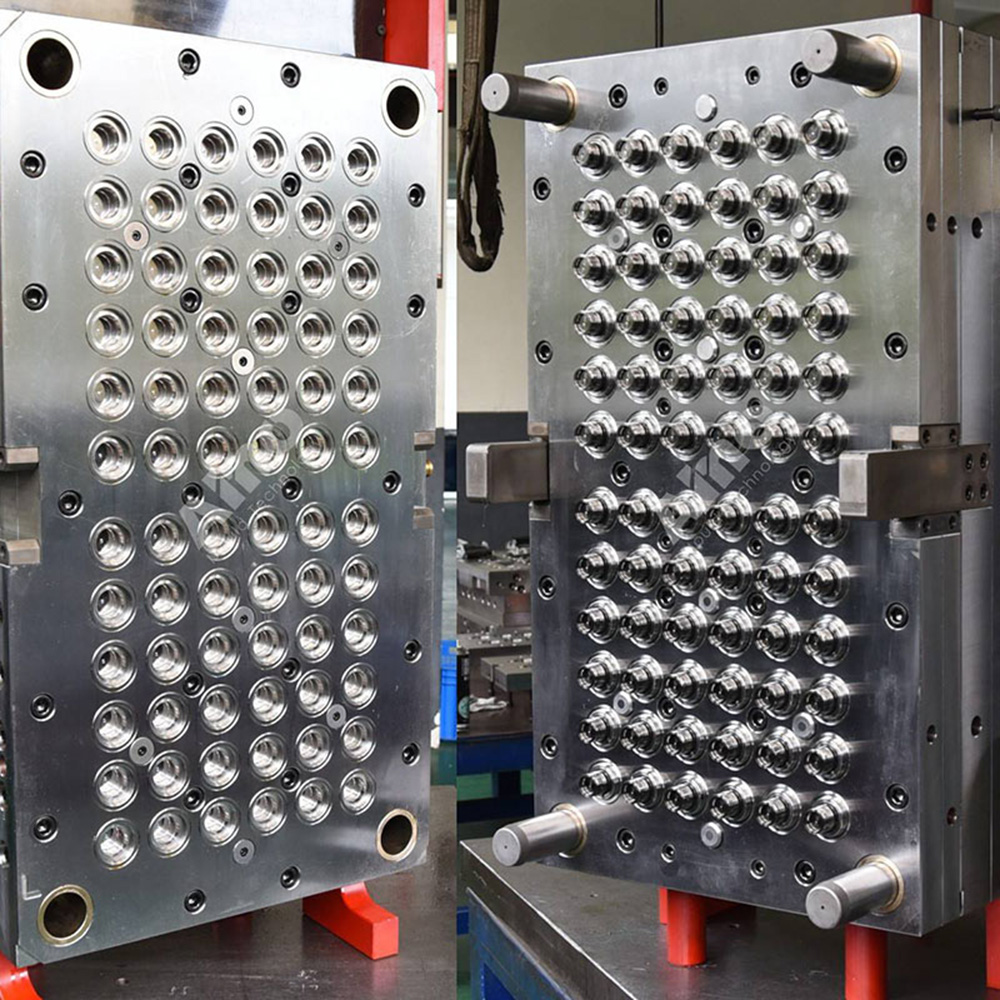
Every cavity must have identical cooling. Circuit lengths must be equal across all cavities. Flow rates must be equal across all cavities. Temperature must be equal across all cavities.
Shuanghao verifies cavity-to-cavity temperature uniformity with thermal imaging.
Manifold Design
Manifolds distribute coolant to individual circuits. Manifolds must provide equal flow distribution. Manifold sizing must avoid pressure imbalances. Shuanghao designs manifolds for optimal flow distribution.
Circuit Layout
Cavity cooling circuits should be arranged in parallel. Circuit lengths should be approximately equal. Circuits should be labeled for easy identification. Shuanghao uses color-coded circuits for easy connection.
Temperature Uniformity Verification
You cannot control what you cannot measure.
Thermal Imaging
Thermal cameras measure mold surface temperature. Temperature uniformity is verified across the mold. Hot spots indicate inadequate cooling. Cold spots indicate excessive cooling. Targets: temperature variation < 5°C across the mold.
Flow Measurement
Flow meters measure coolant flow rates. Flow rates are verified per circuit. Variation indicates blockages or restrictions. Targets: flow variation < 10% across circuits.
Cavity Pressure Monitoring
Cavity pressure sensors reveal fill and cooling consistency. Pressure variation indicates temperature variation. Consistent pressure indicates balanced cooling.
Common Cooling-Related Warpage Problems
Problem: Warpage from Uneven Cooling
Caps consistently warp in the same direction. Temperature mapping reveals hot side/cold side variation. Solutions include balancing cooling circuit flow, adjusting coolant temperatures, adding cooling channels to hot areas, and converting to conformal cooling.
Problem: Cavity-to-Cavity Warpage Variation
Some cavities produce warped caps, others flat. Temperature mapping reveals cavity-to-cavity variation. Solutions include balancing circuit lengths, verifying flow rates per cavity, checking for blockages, and adjusting circuit layout.
Problem: Random Warpage
Caps warp unpredictably from cycle to cycle. Indicates process instability or intermittent cooling issues. Solutions include verifying coolant temperature stability, checking for intermittent blockages, inspecting cooling circuit connections, and monitoring cavity pressure sensors.
Real-World Results: Shuanghao Cooling Solutions
Customer Case: 72-Cavity Cap Warpage
A 72-cavity cap mold was producing caps with out-of-round warpage of 0.30mm. Temperature mapping revealed 12°C variation across the mold. Cooling circuits were unbalanced.
Shuanghao redesigned cooling circuits with conformal cooling, balanced circuit lengths, and zone-specific cooling. Temperature variation was reduced from 12°C to 3°C. Warpage was reduced from 0.30mm to 0.06mm. The customer achieved flat, round caps for the first time.
Customer Case: Oval Cap Warpage
An oval cap was warping in the long axis due to uneven cooling. Conformal cooling was added following the oval contour. Circuit lengths were balanced.
Warpage was eliminated. The cap achieved perfect oval geometry with tolerance of ±0.05mm.
The Shuanghao Cooling Balance Advantage
Shuanghao's systematic approach to balanced cooling circuit design provides conformal cooling following cap contours for uniform heat extraction. Circuit balancing with equal length circuits and parallel flow distribution. Zone-specific cooling with independent circuits for top panel, threads, and TE band. Temperature verification with thermal imaging and flow measurement. Warpage elimination through balanced cooling design.
Conclusion: Flat Caps Through Balanced Cooling
Warpage is not inevitable. It is the result of unbalanced cooling. With proper cooling circuit design, warpage can be prevented.
Shuanghao's balanced cooling solutions deliver conformal cooling that follows cap contours, circuit balancing for cavity-to-cavity uniformity, zone-specific cooling for different cap areas, temperature verification for process control, and warpage elimination for flat, stable caps.
Whether you produce standard round caps or complex oval designs, Shuanghao has the cooling engineering expertise to prevent warpage.
Choose Shuanghao. Choose balanced cooling. Choose flat caps.