Why Bow Hinge Design Is Critical for Flip-Top Cap Flexibility and Durability
Why Bow Hinge Design Is Critical for Flip-Top Cap Flexibility and Durability
In the highly competitive consumer packaging industry, the tactile feedback and longevity of a flip-top cap often dictate consumer brand loyalty. Whether used for premium cosmetics, hair care products, or household cleaning items, a flip-top closure must open smoothly, snap securely, and endure thousands of open-close cycles without failure. Among various hinge configurations, the bow hinge (or curved snap hinge) has emerged as the premier choice for advanced packaging engineers seeking a balance of aesthetic snap-action and mechanical endurance.
As a leading Chinese engineering and manufacturing specialist in high-performance closure tooling, .cap-molds designs and delivers precision-crafted molds optimized for complex hinge kinematics. In this technical whitepaper, our engineering team explores the mechanical principles of bow hinge design, the challenges of molding them at high speeds, and why precise mold architecture is critical for functional excellence.
1. What Is a Bow Hinge and How Does It Work?
Unlike traditional flat living hinges that rely purely on a thin, linear web of flexible polymer, a bow hinge features a curved or arched geometry. This arched profile creates a controlled mechanical snap-back effect:
- Over-Center Snap Action: As the cap lid is opened, the bow-shaped bridge undergoes elastic deformation, storing potential energy until it passes an unstable dead-center point, which forces the lid to snap firmly into an open position.
- Stress Distribution: The curved geometry distributes mechanical stress over a wider surface area rather than concentrating it along a single razor-thin crease, drastically reducing the risk of stress whitening or tearing.
- Aesthetic Snapping Sound: Consumers associate an audible, crisp "snap" with high-quality packaging; the spring-like tension of a properly engineered bow hinge delivers this satisfying acoustic feedback consistently.
2. Mold Engineering Challenges Associated with Bow Hinges
While bow hinges offer superior functional benefits, manufacturing them via high-pressure injection molding introduces distinct tooling complexities that require expert DFM (Design for Manufacturability) execution:
A. Melt Flow Orientation Across Complex Curvatures
To ensure maximum tensile strength along the flexing arc, polymer chains must flow in precise alignment with the curve of the bow. Inadequate gate placement can cause weld lines to form directly across the hinge stress zone, leading to premature mechanical failure.
B. Precision Undercut Management
The arc geometry and its accompanying snap-fit locking lugs require high-precision internal sliding cores and collapsible mechanisms. Even a microscopic misalignment of ±0.005mm can cause flash, sticking, or uneven snapping tension across multi-cavity layouts.
3. The .cap-molds Engineering Approach to Bow Hinge Tooling
To guarantee flawless execution of bow hinge closures, .cap-molds implements an advanced, rigorous manufacturing framework:
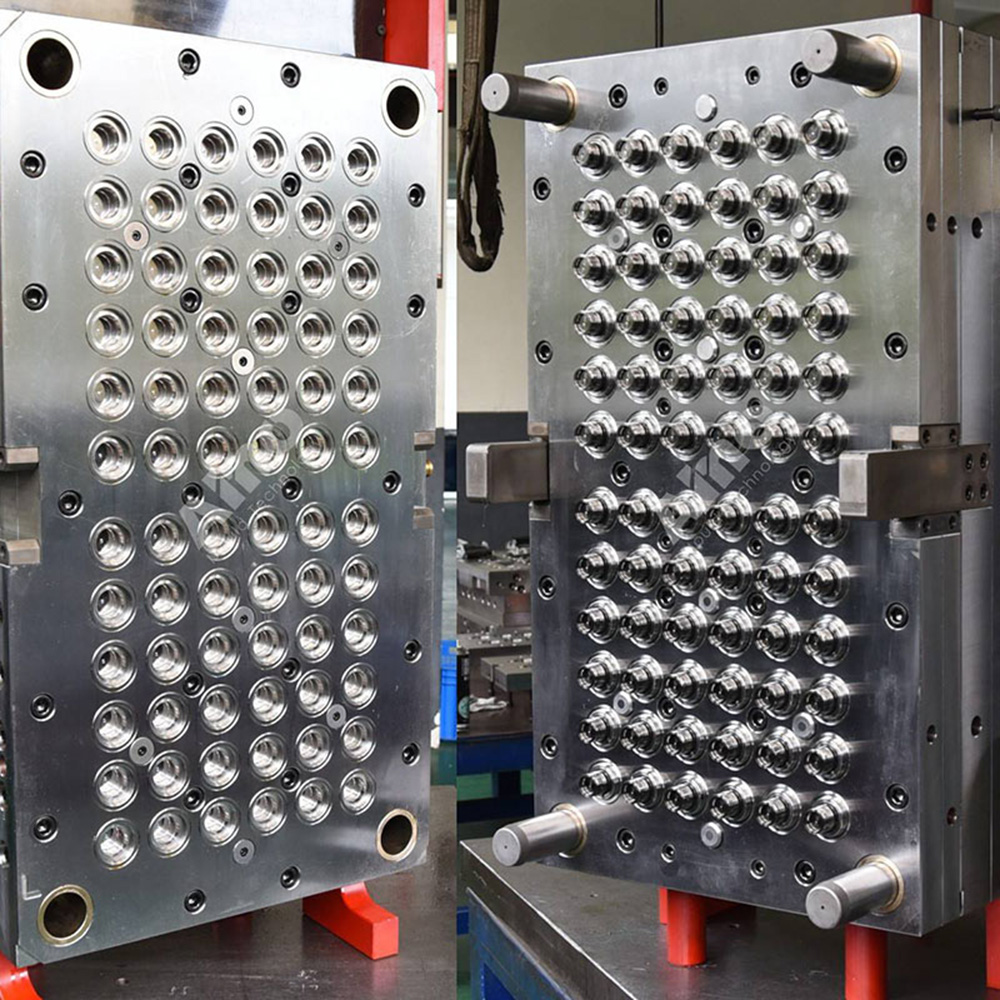
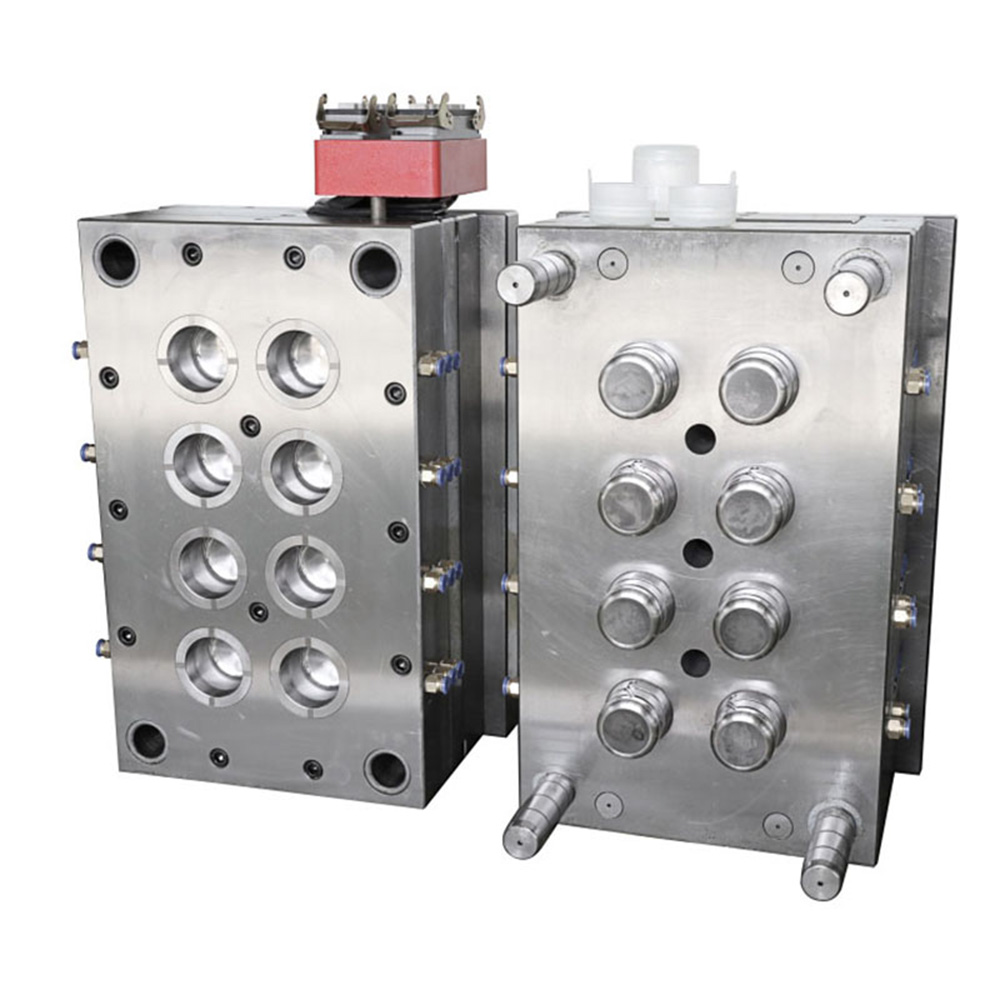
- High-Precision CNC Machining: All core and cavity inserts for bow hinge molds are manufactured on elite Makino and Yasda CNC milling centers, ensuring absolute cavity-to-cavity uniformity and micro-inch surface finishes that eliminate frictional drag.
- Premium Swedish S136 Stainless Steel: Tooling longevity is vital for high-volume production. We utilize vacuum-hardened S136 steel (HRC 48–52), providing exceptional corrosion resistance against damp cooling water and superior wear resistance.
- Targeted Thermal Management: We embed high-conductivity Beryllium Copper (BeCu) inserts around the hinge and snap-fit zones to extract heat rapidly, eliminating thermal warping and keeping cycle times under strict control.
4. Technical Performance Comparison: Flat Living Hinge vs. Bow Hinge
| Performance Parameter | Standard Flat Living Hinge | Advanced Bow Hinge |
|---|---|---|
| Flexural Fatigue Life | Moderate (500,000 to 800,000 cycles) | Exceptional (1,000,000+ cycles) |
| Opening Feedback | Soft, passive friction opening | Crisp, over-center snap-action |
| Stress Concentration | High concentration along a linear crease | Evenly distributed across the curved arch |
| Mold Complexity | Standard parting line configuration | Requires precision sliders and conformal cooling |
Partner with .cap-molds for Your Next Closure Project
Mastering complex closure designs like the bow hinge requires an expert partner who understands both polymer behavior and advanced toolmaking. As a premier Chinese cap mold manufacturer, .cap-molds combines decades of specialized tooling expertise with world-class machining infrastructure to deliver turn-key mold solutions that elevate your product quality.
Ready to optimize your flip-top cap tooling and ensure superior consumer durability? Contact the engineering experts at .cap-molds today to request a comprehensive design review and technical proposal.
Keywords: bow hinge cap mold, flip-top cap mold, living hinge design, bottle cap mold, .cap-molds, China cap mold manufacturer, closure tooling expert, injection molding cap, S136 mold steel, high cavitation mold, snap fit cap tooling, plastic closure design, precision mold engineering, over center hinge mold