The Science of Sealing: How Shuanghao Ensures Zero-Defect Cap Threads
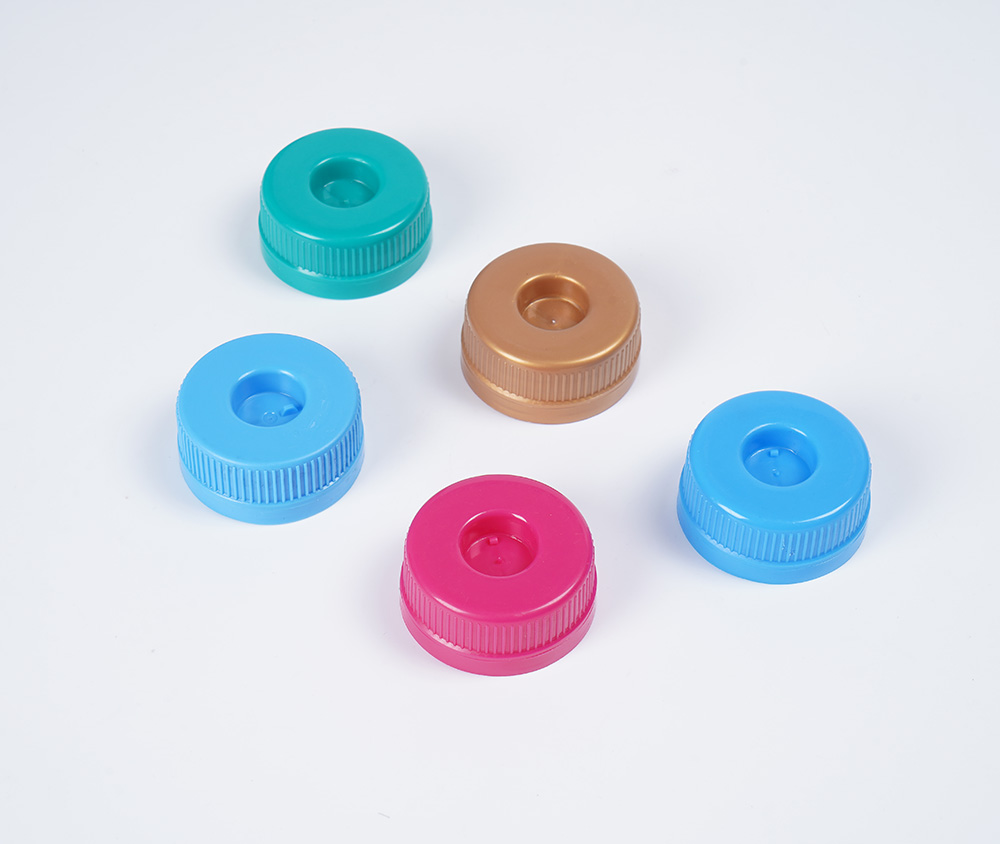
In the world of bottle packaging, the cap thread is the most critical feature you will never see. It is hidden inside the cap, invisible to the consumer. Yet it determines whether the bottle seals perfectly or leaks. Whether the cap opens smoothly or sticks. Whether the product stays fresh or spoils.
The cap thread is the interface between the cap and the bottle. Its geometry, precision, and consistency directly impact sealing performance, opening torque, and tamper-evident functionality. A single defective thread on a single cap can lead to customer complaints, product returns, and brand damage.
At Shuanghao, we have elevated thread manufacturing to a science. This article reveals how our precision mold engineering ensures zero-defect cap threads, producing caps that seal perfectly every time.
Why Cap Threads Fail: Understanding the Defects
Before discussing solutions, it is essential to understand what constitutes a thread defect and why defects occur.
Common Thread Defects
Incomplete threads occur when the mold cavity does not fill completely, leaving gaps in the thread profile. This creates leak paths that compromise sealing.
Flash on threads occurs when excess material escapes between mold components, creating rough edges that interfere with cap-bottle interaction and consumer experience.
Dimensional variation occurs when threads are not consistently sized from cavity to cavity, leading to caps that seal correctly on some bottles but not others.
Surface defects such as rough surfaces or sink marks create friction that affects opening torque and can damage bottle threads during application.
Root Causes of Thread Defects
Poor flow balance causes some cavities to fill slower or with less pressure than others, leading to incomplete filling or dimensional variation.
Inadequate venting traps air at the thread tip, preventing complete filling and creating burn marks.
Insufficient packing allows material to shrink back from the thread surface, creating dimensional variation.
Improper cooling causes differential shrinkage that distorts thread geometry.
Worn mold components produce inconsistent thread dimensions over time.
Shuanghao's approach addresses each of these root causes systematically.
The Shuanghao Thread Engineering Process
Shuanghao's thread engineering begins long before the mold is manufactured and continues through the entire mold life cycle.
Phase 1: Thread Geometry Optimization
The foundation of zero-defect threads is optimal geometry. Shuanghao engineers use advanced simulation to design thread profiles that fill completely, eject cleanly, and seal reliably.
Thread Profile Design
Cap thread geometry is defined by several key parameters. The thread pitch determines the vertical distance between threads, affecting how many turns are required to open the cap. The thread angle determines the shape of the thread flank, affecting sealing force and torque. The thread height determines how deeply the thread engages with the bottle, affecting pull-through resistance. The root radius smooths the transition between the thread and the cap wall, reducing stress concentration.
Shuanghao's engineers optimize these parameters for each specific application, considering the bottle neck finish, the product being packaged, and the desired consumer experience.
Draft Angle Optimization
Threads must have sufficient draft to release cleanly from the mold. Too little draft causes thread damage during ejection. Too much draft reduces sealing surface area.
Shuanghao uses mold flow analysis to determine the optimal draft angle for each thread design, typically ranging from 0.5 to 2 degrees depending on thread depth and material.
Shrinkage Compensation
All plastics shrink as they cool. Shuanghao's thread designs compensate for material-specific shrinkage rates, ensuring that finished threads meet dimensional specifications despite shrinkage. Different materials such as polypropylene, HDPE, and PET have different shrinkage rates, requiring different compensation factors.
Phase 2: Precision Mold Manufacturing
Even the best thread design will fail if the mold is not manufactured with exceptional precision.
Thread Machining Technology
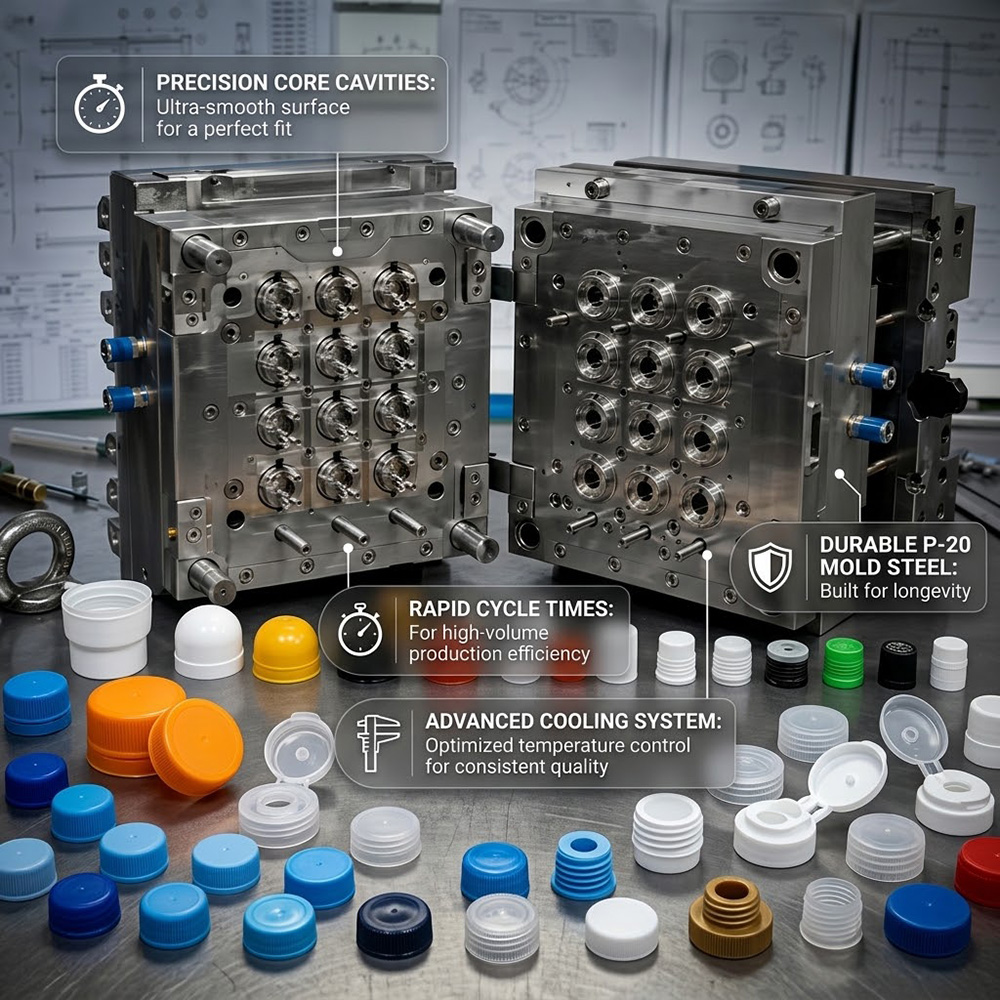
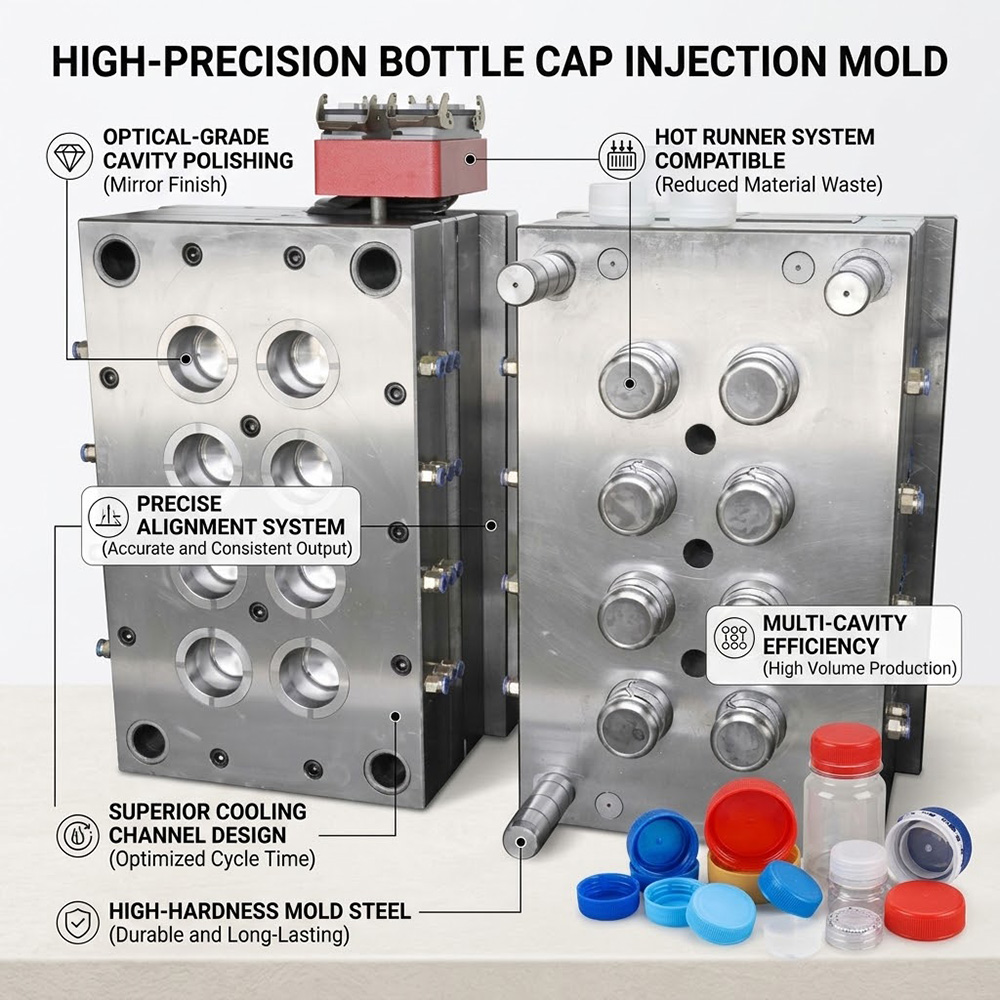
Shuanghao uses specialized thread milling and EDM techniques to produce thread cavities with exceptional accuracy. Thread milling with high-speed CNC machines achieves positioning accuracy of plus or minus 0.005 millimeters. Thread EDM uses electrical discharge machining for complex thread profiles, achieving accuracy of plus or minus 0.003 millimeters.
Single-Setup Manufacturing
All thread surfaces are machined in a single setup to eliminate variation that can occur when repositioning the workpiece between operations. This ensures perfect geometric relationships between the thread and other cap features such as the sealing surface and tamper-evident band.
Surface Finish Requirements
Thread surface finish directly affects cap opening torque and sealing performance. Shuanghao achieves surface finishes of Ra 0.2 to 0.4 micrometers on thread surfaces. This smooth finish reduces friction between cap and bottle threads, ensuring consistent opening torque while maintaining sealing pressure.
Phase 3: Quality Control for Thread Precision
Shuanghao's quality control system verifies thread precision at every stage of mold manufacturing and production.
Thread Inspection Equipment
Optical comparators project magnified thread profiles for visual inspection against master templates. CMM with specialized thread probes measures thread dimensions including pitch diameter, major diameter, minor diameter, and lead angle. Laser scanners capture complete thread geometry for comparison to CAD models.
Inspection Parameters
Shuanghao verifies multiple thread parameters on every cavity. Pitch diameter is the most critical dimension, affecting both sealing and torque. Major diameter affects cap fit on the bottle neck. Minor diameter affects clearance and thread strength. Lead determines how many turns are required to open the cap. Flank angle affects sealing force and torque consistency.
Acceptance Criteria
Shuanghao's acceptance criteria for thread precision are among the strictest in the industry. Pitch diameter tolerance is held to plus or minus 0.02 millimeters. Thread-to-thread variation across cavities is maintained within 0.015 millimeters. Surface finish is maintained at Ra 0.3 micrometers maximum.
Phase 4: Processing for Thread Quality
Even the most precise mold will not produce zero-defect threads without proper processing. Shuanghao provides comprehensive process guidance.
Injection Parameters for Threads
Melt temperature must be high enough to fill thin thread features but low enough to prevent degradation. Shuanghao recommends material-specific temperature ranges. Injection speed should be fast enough to fill threads before material freezes but slow enough to prevent jetting. Packing pressure and time must be sufficient to compensate for thread shrinkage without creating flash.
Mold Temperature Control
Consistent mold temperature is essential for thread dimensional stability. Shuanghao recommends mold temperature ranges for different materials and thread geometries, typically 30 to 50 degrees Celsius for polypropylene and 40 to 60 degrees Celsius for HDPE.
Venting for Threads
Proper venting at the thread tip is critical for complete filling. Shuanghao molds feature precision venting at the last point of thread fill, with vent depths of 0.02 to 0.03 millimeters to allow air escape while preventing material flash.
Specialized Thread Technologies
Shuanghao offers specialized thread technologies for demanding applications.
Continuous Threads
Continuous threads provide maximum sealing surface and are preferred for carbonated beverage caps that must retain pressure. Shuanghao's continuous thread molds feature extended cooling for dimensional stability and precision ejection for clean thread release.
Interrupted Threads
Interrupted threads have gaps that allow pressure release before the cap is fully removed. These are common on hot-fill applications and some child-resistant closures. Shuanghao's interrupted thread molds require complex core geometry and precise timing for clean thread formation.
Multi-Start Threads
Multi-start threads allow caps to be removed with fewer turns, improving consumer convenience. Shuanghao's multi-start thread molds feature specialized gating to ensure balanced filling of all thread starts and precise alignment of multiple thread leads.
Tamper-Evident Thread Integration
Tamper-evident bands are often integrated with the thread geometry. Shuanghao's molds produce tamper-evident features that are precisely aligned with thread starts, ensuring consistent breakaway torque and clean band separation.
Common Thread Defects and Solutions
Short Shots on Threads
Short shots occur when thread tips do not fill completely. Solutions include increasing injection speed, raising melt temperature, improving venting at thread tips, and increasing cavity pressure.
Flash on Threads
Flash occurs when material escapes between mold components at the thread parting line. Solutions include verifying mold clamp force, checking for mold component wear, adjusting injection speed and pressure, and inspecting vent depths.
Dimensional Variation Across Cavities
Dimensional variation occurs when threads differ from cavity to cavity. Solutions include checking hot runner temperature balance, verifying cavity-to-cavity cooling consistency, inspecting for worn or damaged cavities, and confirming injection speed profile.
Surface Roughness
Surface roughness on threads creates inconsistent torque and potential leakage. Solutions include verifying mold surface finish, checking for material degradation, adjusting mold temperature, and inspecting for residue buildup in cavities.
Real-World Results: Shuanghao Thread Performance
Customer Case: Carbonated Beverage Producer
A carbonated beverage producer was experiencing intermittent sealing failures on their 28-millimeter caps. Leakage rates were running at 1.5 percent, leading to customer complaints and product returns.
Shuanghao provided new molds with optimized thread geometry, enhanced cooling, and precision machining.
Results included reduction in sealing failure rate from 1.5 percent to 0.08 percent, consistent opening torque across all caps, elimination of customer complaints related to leakage, and payback period of 9 months.
Customer Case: Pharmaceutical Packaging Company
A pharmaceutical packaging company needed caps with extremely tight thread tolerances for prescription bottles. Child-resistant closure functionality required precise thread engagement to ensure safety mechanism reliability.
Shuanghao provided molds with enhanced thread precision and comprehensive quality documentation.
Results included thread pitch diameter variation held to plus or minus 0.01 millimeters, child-resistant mechanism reliability of 99.95 percent, full traceability documentation for regulatory compliance, and successful FDA inspection with no thread-related findings.
The Shuanghao Zero-Defect Guarantee
Shuanghao is so confident in our thread engineering that we offer a zero-defect guarantee for thread quality on new molds.
Our guarantee includes cavity-to-cavity thread dimension variation of less than 0.015 millimeters, surface finish of Ra 0.3 micrometers or better on all thread surfaces, no visible flash or short shots on threads under standard inspection, and documented thread inspection data for every cavity.
This guarantee is backed by comprehensive quality documentation and ongoing technical support.
Conclusion: The Science of Sealing
Zero-defect cap threads are not a matter of luck. They are the result of scientific engineering, precision manufacturing, and rigorous quality control.
At Shuanghao, our thread engineering process includes geometry optimization for complete filling and reliable sealing, precision machining for micron-level thread accuracy, comprehensive inspection for dimensional verification, process guidance for consistent production, and specialized technologies for demanding applications.
Whether you produce caps for carbonated beverages requiring pressure retention, pharmaceutical products requiring child-resistant functionality, or food products requiring reliable sealing, Shuanghao has the thread engineering expertise to deliver zero-defect performance.
Choose Shuanghao. Choose the science of sealing.