Case Study: Reducing Cap Weight by 15% Without Compromising Seal Performance
In the global packaging industry, sustainability initiatives and raw material cost optimization have made plastic closure lightweighting a top priority for beverage brand owners and converters. However, aggressively stripping resin weight from bottle closures—such as 29/25 CSD or 30/25 water caps—often introduces catastrophic engineering risks: loss of carbon dioxide retention, seal lip deformation, thread stripping under high torque, and environmental stress cracking (ESC).
As a specialized Chinese bottle cap mold manufacturer and precision tooling expert, cap-molds recently executed a comprehensive lightweighting engineering program for a major beverage converter. This technical case study details how we successfully reduced cap weight by 15% (from 2.10 grams down to 1.78 grams) while fully preserving seal integrity, top-load strength, and high-speed production efficiency.
1. The Engineering Challenge: Balancing Lightweighting and Sealing Integrity
The client's standard 1881 CSD closure was plagued by structural rigidity bottlenecks when resin volume was reduced. The primary engineering hurdles included:
- Seal Lip Thinning & Deflection: Reducing wall thickness around the internal plug seal caused the sealing lip to flex under internal gas pressure, risking carbonation leakage over extended shelf-life storage.
- Torque Retention & Thread Stripping: Thinner skirt geometries risked radial expansion during high-speed capping, leading to cap pop-off or stripped threads.
- Warpage & Dimensional Shrinkage: Asymmetrical cooling in lightweight thin-walled sections caused out-of-roundness (ovality), compromising the tamper-evident band bridge integrity.
2. Technical Intervention Strategies by cap-molds
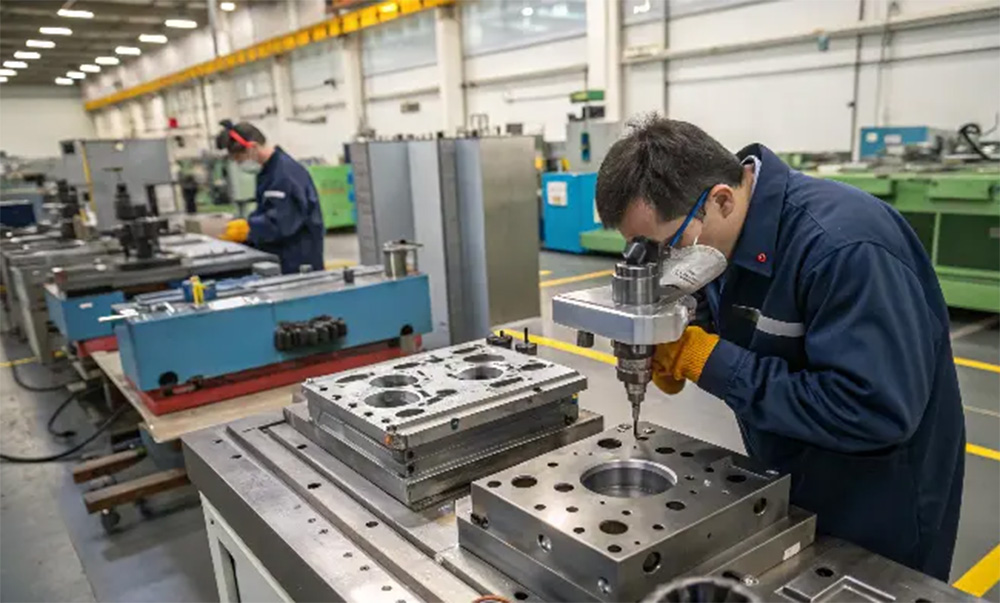
To achieve a 15% weight reduction without compromising mechanical performance, cap-molds deployed an advanced engineering methodology combining Finite Element Analysis (FEA), high-precision mold machining, and optimized gate cooling:
A. Advanced FEA Stress & Sealing Pressure Simulation
Before cutting steel, our engineering team utilized nonlinear FEA software to simulate internal pressures up to 6.0 bar and simulated top-load stacking forces. By re-distributing structural mass away from non-load-bearing areas and reinforcing the primary sealing fulcrum, we optimized the stress distribution across the plug seal.
B. Redesigned Plug Seal Geometry & Reinforced Ribbing
Instead of a uniform wall thinning approach, we introduced a specialized multi-angle tapered plug seal that wedges tightly against the bottle finish inner diameter under pressure. Additionally, micro-ribbing was engineered into the outer cap skirt to maintain radial clamping rigidity while eliminating redundant plastic mass.
C. High-Precision Conformal Cooling & Micron-Level Tolerancing
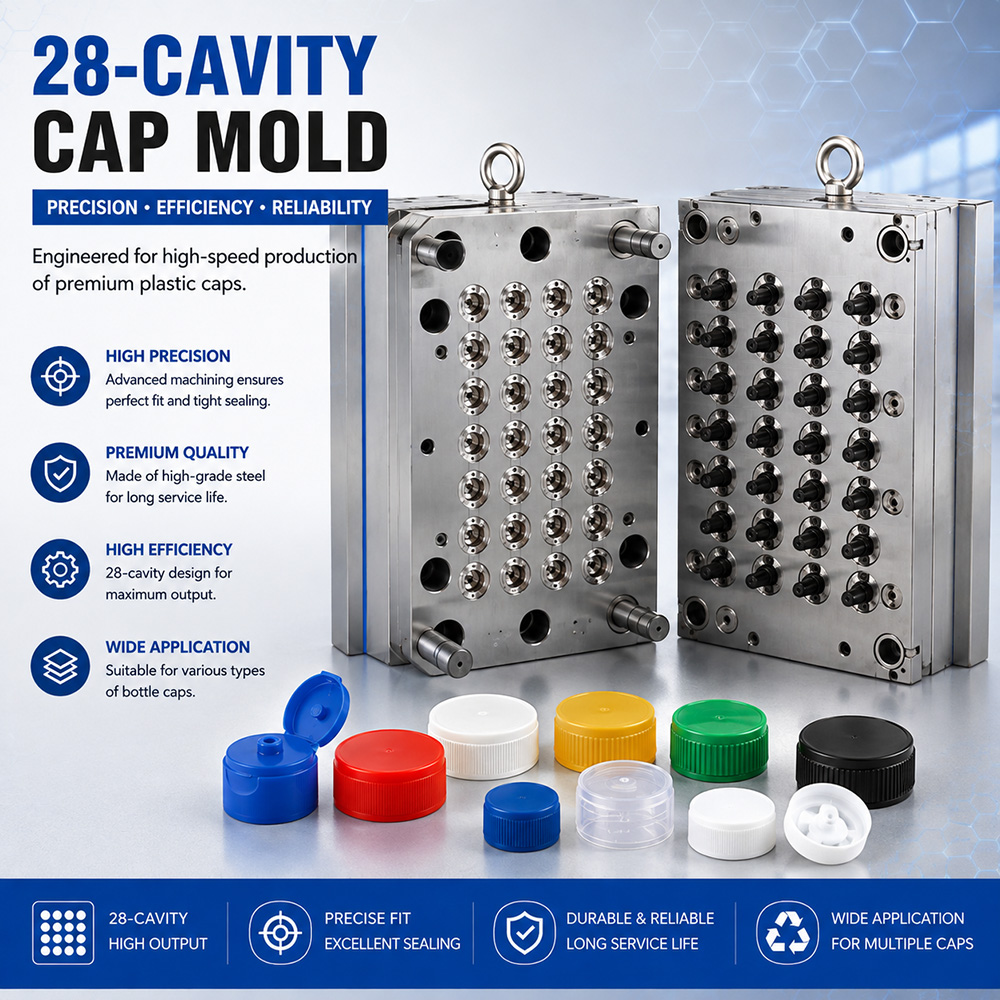
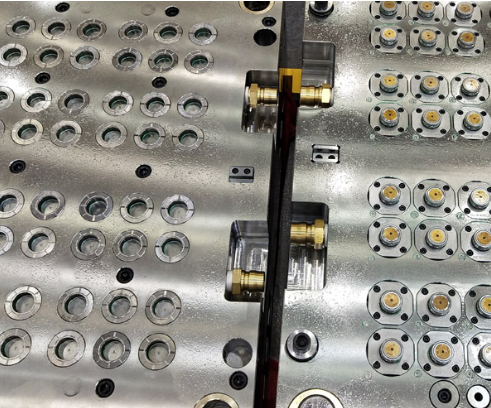
Lightweight thin-walled closures are highly sensitive to thermal gradients. cap-molds integrated high-conductivity copper alloy core inserts with optimized conformal cooling loops, ensuring uniform crystallization and preventing post-molding warpage across all 64 cavities.
3. Case Study Performance Metrics & Validation Results
The newly engineered 64-cavity lightweight cap mold was benchmarked against the standard baseline mold under rigorous laboratory and production line conditions.
| Performance Parameter | Standard Baseline Cap (2.10g) | cap-molds Lightweight Cap (1.78g) | Performance Improvement |
|---|---|---|---|
| Closure Weight | 2.10 grams | 1.78 grams | 15.2% Weight Reduction |
| CO2 Leakage / Retention Test (6.0 bar, 28 Days) | 100% Pass | 100% Pass | Zero Seal Degradation |
| Application / Removal Torque | 1.35 Nm | 1.32 Nm | Maintained Within Spec |
| Top-Load Crush Resistance | 320 N | 305 N | Fully Compliant (>250N Req) |
| Injection Cycle Time | 4.2 seconds | 3.9 seconds | 7.1% Faster Cycle |
4. Conclusion: Unlocking Sustainable Value with cap-molds
Reducing plastic cap weight by 15% yields massive annual resin savings for high-volume beverage manufacturers, translating to millions of dollars in cost reductions and a significantly lowered carbon footprint. However, achieving this without sacrificing seal performance requires world-class mold design and manufacturing precision.
As a leading Chinese bottle cap mold manufacturer, cap-molds empowers global packaging converters with advanced lightweighting solutions, high-cavity hot runner systems, and robust tooling engineered for maximum profitability and reliability.