Shuanghao's Solutions for Caps with Integrated Tamper-Evident Bands
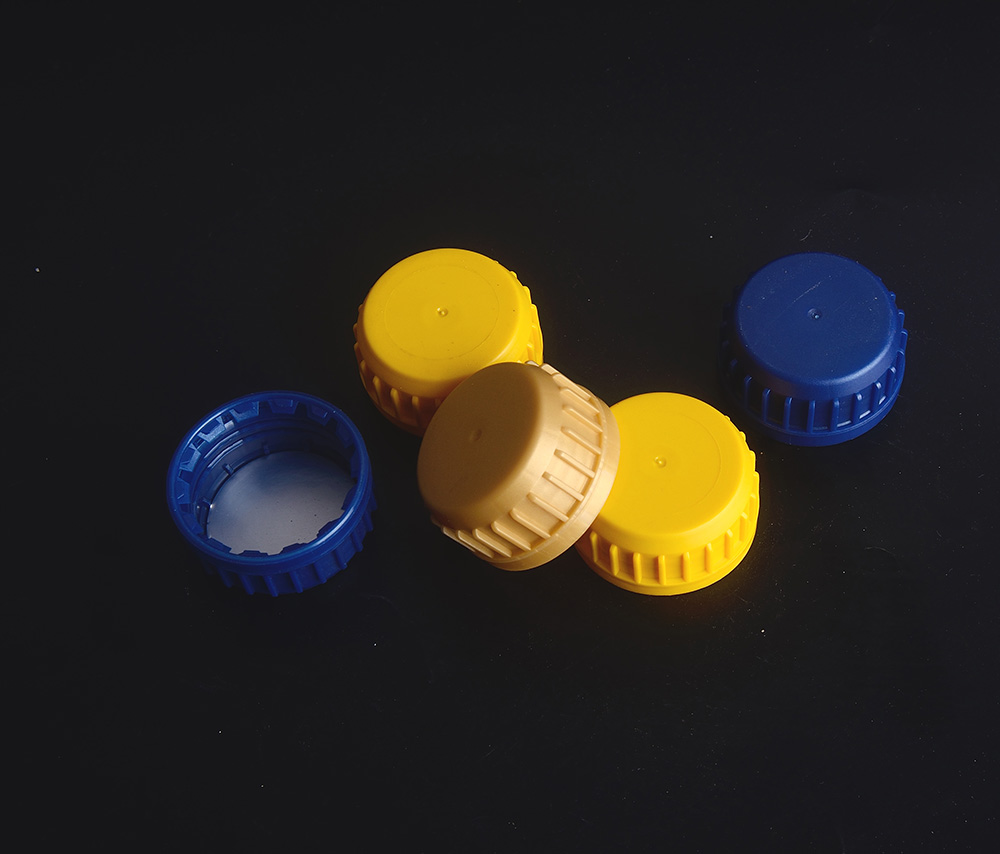
The tamper-evident band is one of the most visible and trusted security features in packaging. When a consumer twists open a bottle cap and hears that distinctive snap, they know the product has not been opened before. That sound—and the visual evidence of broken bridges—provides immediate assurance of product safety.
But manufacturing caps with integrated tamper-evident bands is extraordinarily challenging. The TE band must stay attached to the cap during capping and shipping. It must break cleanly and consistently when the consumer opens the bottle. It must not break prematurely. It must not remain attached to the bottle after opening. And it must do all this across millions of caps, in varying temperatures and conditions.
At Shuanghao, we have developed specialized mold engineering solutions for caps with integrated tamper-evident bands. This article reveals how we design, manufacture, and validate these complex closures.
Understanding Tamper-Evident Band Design
Before discussing mold solutions, it is essential to understand how TE bands work.
Basic TE Band Structure
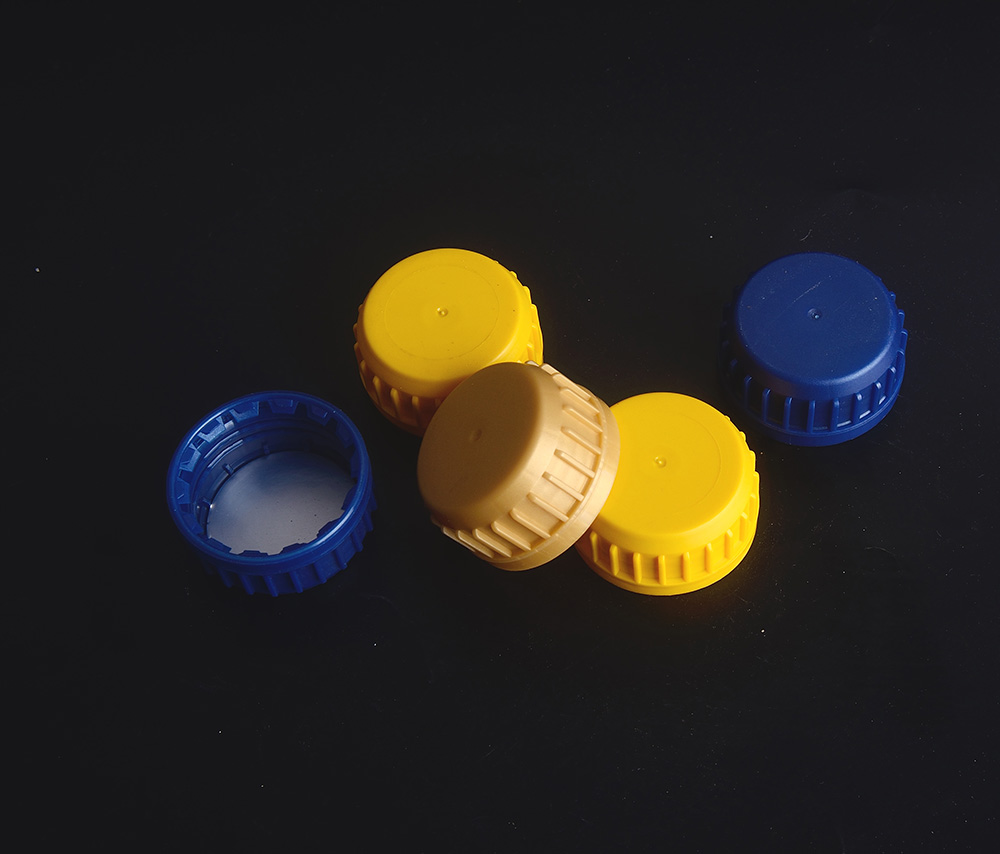
The tamper-evident band consists of several components. The band ring is a separate ring attached to the cap skirt by small bridges. The bridges are thin plastic connections that break when the cap is first opened. The locking lugs are internal protrusions that engage with the bottle neck. Retaining lugs hold the band on the cap during capping and shipping.
How TE Bands Function
When the cap is tightened, the locking lugs pass over the bottle neck's locking ring. The lugs flex inward, then snap back into place. When the consumer opens the cap, the bottle's locking ring pushes against the TE band lugs. The bridges connecting the band to the cap break. The band remains on the bottle while the cap is removed.
The Breaking Mechanism
The bridges must break cleanly and consistently. Each bridge should break at approximately the same force. All bridges should break simultaneously. No bridges should break prematurely during capping or shipping. The band should release completely from the cap, not remain partially attached.
The TE Band Challenge
Manufacturing caps with integrated TE bands presents multiple challenges.
Bridge Consistency
Bridges are very thin, typically 0.2 to 0.4 millimeters thick undercut within the cap skirt. They must fill completely without short shots or flow marks. Bridge dimensions must be identical from cavity to cavity. Bridge strength must be consistent across all caps.
Undercut Ejection
The TE band's locking lugs are undercuts that lock behind the bottle's locking ring. These undercuts must be released from the mold during ejection. This requires collapsible cores, lifters, or complex ejection sequences.
Cooling Uniformity
The TE band area is thin and cools quickly. The adjacent cap skirt is thicker and cools more slowly. This differential cooling creates residual stress that can affect bridge integrity.
Dimensional Stability
The TE band inner diameter must precisely match the bottle's locking ring. Too tight, and the band will not seat properly. Too loose, and the locking lugs will not engage.
Shuanghao's TE Band Mold Solutions
Shuanghao has developed specialized mold engineering for TE band caps.
Collapsible Core Technology
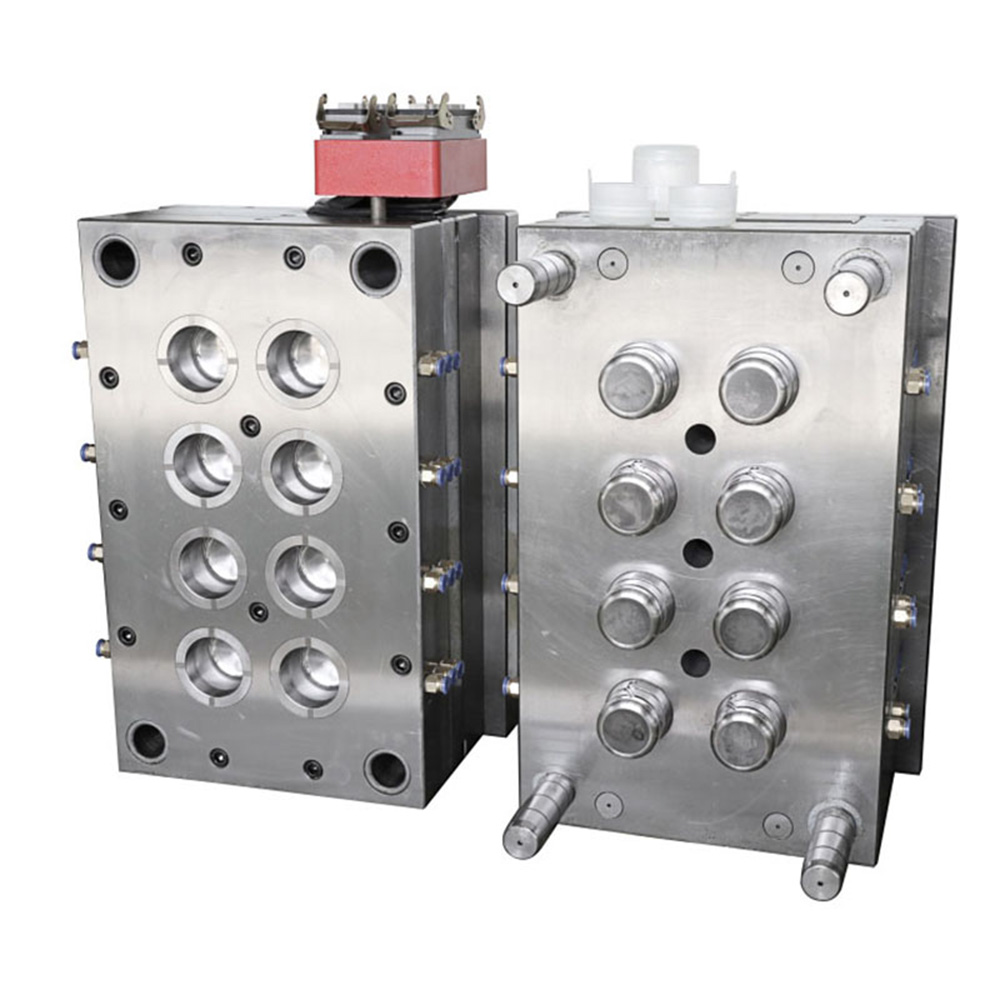
The most common solution for TE band undercuts is the collapsible core. The core that forms the cap interior has segments that retract inward after molding. The TE band undercuts are formed by these core segments. After the cap is molded, the core segments collapse inward. The TE band undercuts are no longer engaged. The cap can be ejected without damaging the band.
Shuanghao's collapsible cores use precision-ground segments that move synchronously. Guiding systems ensure smooth, reliable retraction. Hardened wear surfaces maintain precision over millions of cycles.
Lifter Systems
For smaller caps or where collapsible cores are not feasible, lifter systems provide an alternative. Lifters are angled components that move both outward and upward during ejection. This movement releases the TE band undercuts while ejecting the cap.
Shuanghao's lifter systems use hardened steel components and precision guiding for reliable operation.
Bridge Design Optimization
Bridge geometry is critical for consistent breakaway. Shuanghao engineers optimize bridge dimensions including thickness, width, length, and shape. Bridge thickness controls breakaway force. Bridge width affects force distribution. Bridge length affects flexibility. Bridge shape includes radiused ends to prevent stress concentration.
Shuanghao uses mold flow analysis to optimize bridge filling. The analysis ensures bridges fill completely without short shots or weld lines.
TE Band Cooling
Proper cooling of the TE band area is essential for dimensional stability and consistent breakaway. Shuanghao's cooling designs include conformal cooling channels near the TE band area. Independent cooling circuits for TE band vs. cap skirt allow zone-specific temperature control. Balanced cooling ensures cavity-to-cavity consistency.
Ejection Strategies
Ejecting TE band caps requires special care. The band is thin and can be damaged by aggressive ejection. Shuanghao uses sleeve ejectors to push the cap by its entire rim. Air ejection assists release by breaking vacuum. Ejection force is profiled to start gently, increasing after the undercuts are cleared.
Bridge Geometry Guidelines
Shuanghao's TE band bridge design is based on extensive experience.
Bridge Dimensions
For polypropylene caps, typical bridge thickness ranges from 0.2 to 0.4 millimeters. Bridge width is typically 0.5 to 1.0 millimeters. Bridge length is typically 0.8 to 1.5 millimeters. Bridge spacing is typically 1.5 to 2.5 millimeters between bridges.
The number of bridges depends on cap diameter. A 28-millimeter cap typically has 8 to 12 bridges. A 38-millimeter cap has 12 to 16 bridges.
Relationship Between Bridge Geometry and Breakaway Force
Increasing bridge thickness increases breakaway force. Increasing bridge width increases breakaway force. Increasing bridge length decreases breakaway force. Shuanghao calculates bridge dimensions to achieve target breakaway force of 5 to 15 Newton-meters for most applications.
Breakaway Force Targets
Carbonated beverage caps require higher breakaway force of 10 to 15 Newton-meters. Still water caps require lower breakaway force of 5 to 10 Newton-meters. Pharmaceutical caps require precise breakaway force of 8 to 12 Newton-meters.
Material Selection for TE Bands
Material choice significantly affects TE band performance.
Preferred Materials
Polypropylene is the standard for TE band caps. It offers good flexibility for the TE band lugs, good hinge strength for bridges, good chemical resistance, and wide processing window.
HDPE offers higher stiffness which may increase breakaway force and is less common for TE bands due to higher rigidity.
Material Properties for TE Bands
Melt flow index affects fill of thin bridge sections. Shuanghao recommends MFI of 10 to 20 for TE band caps. Flexural modulus affects bridge stiffness and breakaway force. Impact resistance ensures the TE band does not crack during capping or shipping.
Quality Control for TE Band Caps
TE band caps require specialized quality control.
Bridge Inspection
Bridges are visually inspected for cracks, short shots, or flash. Bridge thickness is measured using optical measurement. Bridge width is verified. Breakaway force is tested using torque testers.
Hardness testing ensures the TE band is functional through any residual stress.
Breakaway Force Testing
Breakaway force is the torque required to break the bridges. Shuanghao uses automated torque testers to measure breakaway force. Testing is performed at regular intervals. Cavity-to-cavity variation is monitored. Statistical process control tracks breakaway force trends.
Retention Testing
After bridges break, the TE band must remain on the bottle. Shuanghao tests for band retention after opening. The band should not fall off or remain attached to the cap.
Common TE Band Defects and Solutions
Problem: Bridges Breaking Prematurely
Premature breakage occurs during capping or shipping. Solutions include increasing bridge thickness, reducing bridge width, reducing bridge length, and verifying bridge material properties.
Problem: Bridges Not Breaking
Bridges that do not break during opening frustrate consumers. Solutions include decreasing bridge thickness, increasing bridge width, decreasing bridge length, and checking for material changes.
Problem: TE Band Sticking to Cap
Band remaining attached to cap indicates incomplete bridge breakage. Solutions include reviewing bridge geometry, checking for flash between bridges, and verifying breakaway force consistency.
Problem: TE Band Falling Off Bottle
Band falling off after opening indicates insufficient band retention. Solutions include increasing locking lug engagement, verifying TE band inner diameter, and checking bottle locking ring dimensions.
Real-World Results: Shuanghao TE Band Customers
Customer Case: Carbonated Beverage Manufacturer
A carbonated beverage manufacturer needed a TE band cap that would break consistently across all bottles. Existing caps had unpredictable breakaway force, causing consumer complaints.
Shuanghao redesigned the bridge geometry and implemented collapsible core technology. Breakaway force variation decreased from plus or minus 40 percent to plus or minus 10 percent. Consumer complaints dropped by 90 percent.
Customer Case: Bottled Water Company
A bottled water company wanted to add TE bands to their caps for enhanced security. Existing non-TE caps were simple to mold, but TE band designs were problematic.
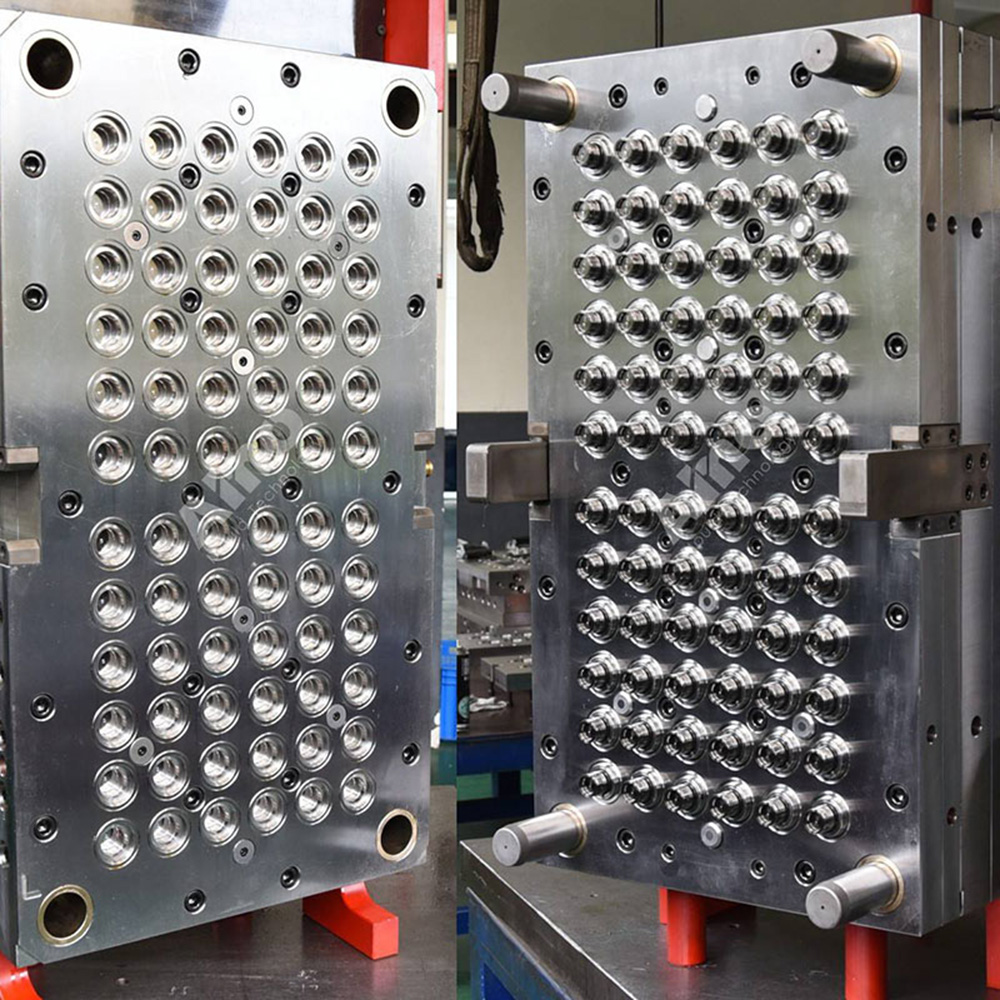
Shuanghao developed a 72-cavity TE band cap mold with collapsible cores and optimized cooling. The mold produces TE band caps at 6-second cycles with 98.5 percent first-pass yield. TE band defects are less than 0.2 percent.
The Shuanghao TE Band Advantage
Shuanghao's TE band expertise provides specialized mold engineering including collapsible core and lifter systems. Bridge optimization ensures consistent breakaway force. Cooling design for TE band area maintains dimensional stability. Robust ejection systems including sleeve and air ejection. Quality control with breakaway force testing and retention validation.
Conclusion: Secure Caps, Consumer Trust
Tamper-evident bands provide essential security for consumer products. But a TE band only works if it is molded correctly. It must break cleanly, consistently, and only when intended.
Shuanghao's specialized mold solutions for TE band caps deliver reliable breakaway force, consistent bridge integrity, clean ejection without damage, and comprehensive quality validation.
Whether you produce carbonated beverage caps requiring high breakaway force or water bottle caps requiring low breakaway force, Shuanghao has the TE band expertise to meet your needs.
Choose Shuanghao. Choose secure tamper-evident caps. Choose consumer trust.