Shuanghao's Solutions for Caps with Living Hinges and Flip-Tops
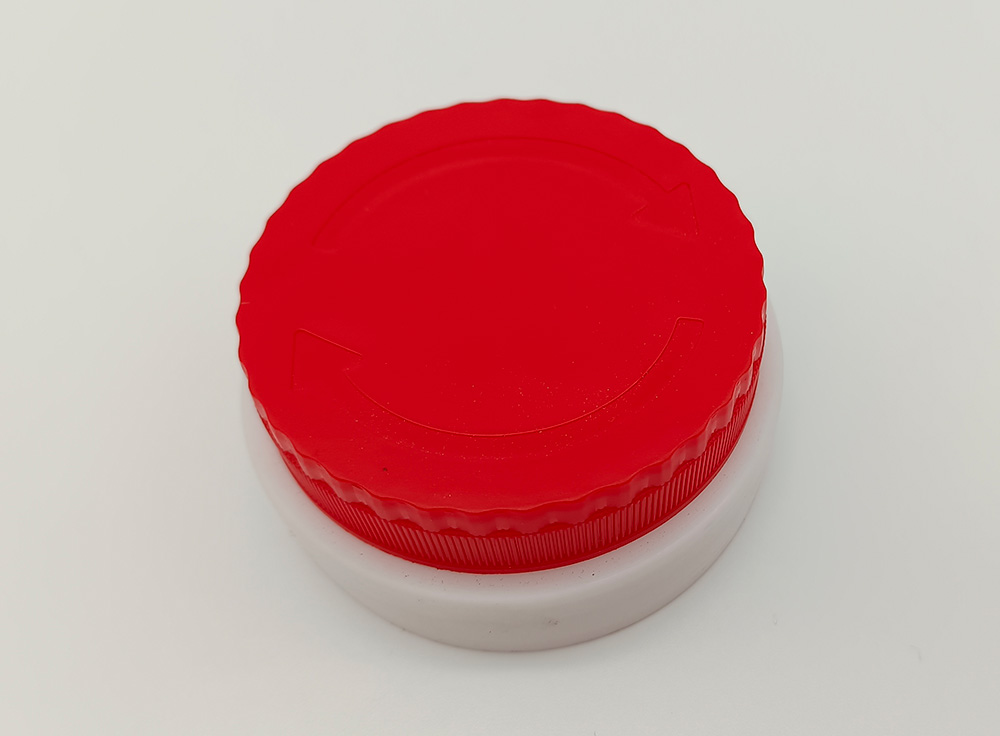
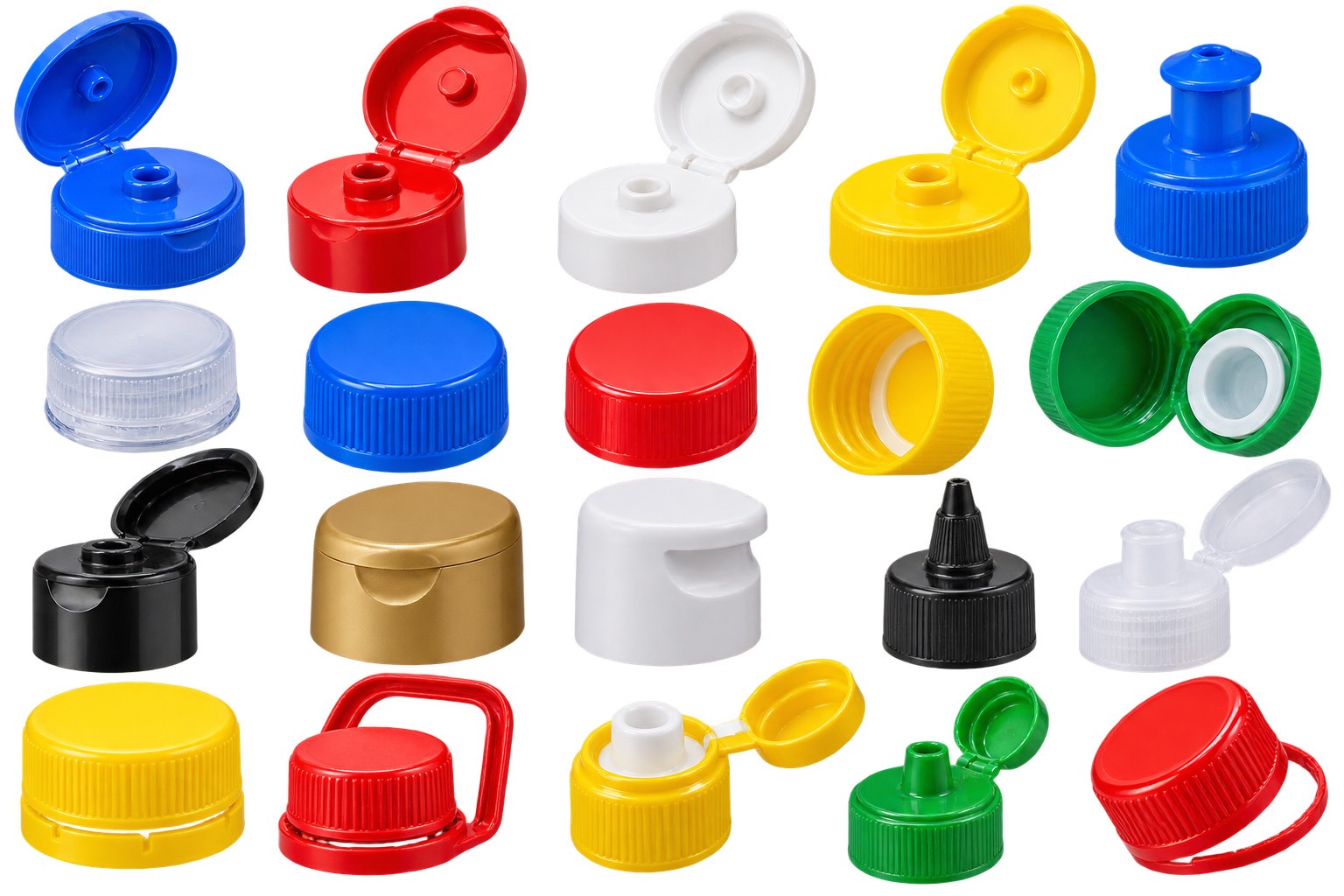
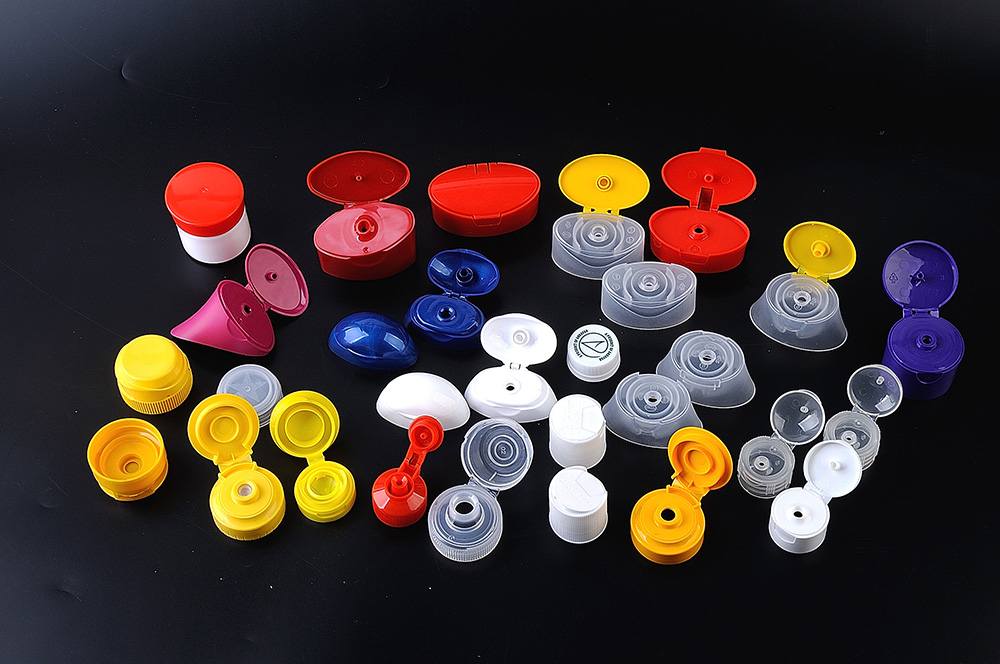
The flip-top cap is an engineering marvel. With a simple flick of the thumb, it opens. With a press, it closes. No separate parts. No assembly required. Just a single piece of plastic that flexes millions of times without breaking.
The secret is the living hinge—a thin section of plastic that connects the cap body to the flip-top lid. This hinge must be flexible enough to open easily, strong enough to not break, and durable enough to last the life of the product.
Living hinges are among the most demanding features in injection molding. A hinge that is too thick is stiff and may crack. A hinge that is too thin tears. A hinge that is not properly oriented fails prematurely.
At Shuanghao, we have developed specialized mold solutions for caps with living hinges and flip-tops. This article reveals our approach to engineering these remarkable closures.
Understanding Living Hinges
Before discussing solutions, it is essential to understand what living hinges are and how they work.
What Is a Living Hinge?
A living hinge is a thin section of plastic that connects two larger sections. It is molded as an integral part of the cap—there is no assembly. The hinge flexes rather than rotates. The flexing action is possible because the material is stretched on the outside of the bend and compressed on the inside.
The Science of Flexing
When a living hinge bends, the outer surface stretches. The inner surface compresses. The material must accommodate this deformation without cracking. The hinge's ability to flex repeatedly without failure is called fatigue resistance.
The Ideal Material
Polypropylene is the dominant material for living hinges. It has excellent fatigue resistance. It flexes repeatedly without cracking. It has good chemical resistance. It is low cost. No other commodity plastic approaches polypropylene's living hinge performance.
HDPE can be used but has lower fatigue resistance. PET may be used for some applications but is less common.
Living Hinge Geometry
The geometry of the living hinge determines its performance.
Critical Dimensions
Hinge thickness is the most critical dimension. Too thick, and the hinge is stiff and may crack. Too thin, and the hinge tears. The optimal thickness range for polypropylene is 0.20 to 0.35 millimeters. For most applications, 0.25 to 0.30 millimeters is ideal.
Hinge length affects the range of motion. Longer hinges allow greater opening angles. Shorter hinges provide more positive closure. Typical hinge length is 5 to 15 millimeters depending on cap size.
Hinge width distributes stress across the hinge. Wider hinges are stronger but stiffer. Narrower hinges are more flexible but weaker.
Hinge transition where the hinge meets the thicker body and lid sections is critical. Sharp corners concentrate stress and initiate cracks. Shuanghao uses generous radii of 0.3 to 0.5 millimeters at hinge transitions.
The "Living Hinge Curve"
Shuanghao uses a curved or radiused hinge profile rather than a straight, flat hinge. The curved profile distributes stress more evenly. It provides smoother flexing action. It reduces the peak stress at the transition points. The radius is typically 1.0 to 2.0 millimeters.
The Role of Molecular Orientation
Molecular orientation is the secret to living hinge durability.
Why Orientation Matters
Polymer molecules are long chains. When they are aligned (oriented) in a specific direction, the material becomes stronger in that direction. For a living hinge, the molecules should be oriented across the hinge, not along it.
When the hinge bends, the stress is across the hinge width. Molecules oriented across the hinge resist this stress. Molecules oriented along the hinge offer little resistance and allow cracks to propagate.
How Shuanghao Achieves Correct Orientation
Gate placement controls flow orientation. The gate should be placed so that melt flows across the hinge, not along it. For a living hinge, the melt should enter from the side, flowing perpendicular to the hinge axis.
Flow analysis validates orientation. Shuanghao uses mold flow analysis to predict molecular orientation. Gate locations are adjusted to achieve cross-hinge flow. Weld lines are positioned away from hinge areas.
Mold design considerations for orientation include gate placement on the side of the cap, multiple gates for large caps, and valve gates for precise flow control.
Mold Design for Living Hinges
Specialized mold design features are required for living hinge caps.
Hinge Cavity Design
The hinge cavity is the most critical feature. Thickness must be precisely controlled. Shuanghao holds hinge thickness to plus or minus 0.02 millimeters. Surface finish should be smooth (Ra 0.2 micrometers) to prevent stress concentration. The transition radii must be generous.
Gate Placement
Gate location determines molecular orientation. Side gating is best for living hinges (gate on the side, flow across hinge). Center gating is poor for living hinges (flow parallel to hinge). Multi-point gating may be used for large caps.
Shuanghao uses valve gates for precise flow control.
Cooling Considerations
The thin hinge cools much faster than thick body and lid sections. Shuanghao's cooling design balances heat extraction. Differential cooling can create residual stress that reduces hinge life. Adequate cooling time prevents premature hinge damage during ejection.
Ejection Considerations
The flip-top lid must eject cleanly without hinge damage. Shuanghao uses sleeve ejectors for gentle, even ejection. Air ejection assists release without contact. Ejector pins are placed away from hinge area.
Material Selection for Living Hinges
Material choice is the most important factor for hinge durability.
Polypropylene Grades
Impact copolymer PP provides excellent fatigue resistance—the best choice for living hinges. High molecular weight grades provide greater toughness. Nucleated grades have faster crystallization, which may affect hinge flexibility.
Shuanghao recommends impact copolymer PP with MFI of 10-15 for most flip-top caps.
Materials to Avoid
Homopolymer PP has lower fatigue resistance and is not recommended. Filled materials (talc, glass) reduce flexibility and accelerate hinge failure. Regrind content should be limited to 10-20 percent maximum. Recycled PP has unpredictable fatigue performance.
Processing for Living Hinge Durability
Proper processing is essential for achieving maximum hinge life.
Melt Temperature
Higher melt temperature increases molecular mobility, which helps orientation. Lower melt temperature reduces degradation. Shuanghao recommends melt temperatures of 210-230 degrees Celsius for PP living hinges—the middle to upper end of the range.
Mold Temperature
Higher mold temperature allows more molecular relaxation and reduces residual stress. Shuanghao recommends mold temperatures of 30-50 degrees Celsius for living hinges. Higher mold temperatures (toward 50°C) improve hinge durability.
Injection Speed
Moderate injection speed promotes cross-hinge flow without excessive shear. Shuanghao recommends injection speeds that fill the hinge area in 0.5-1.0 seconds.
Packing and Cooling
Lower packing pressure reduces residual stress. Shuanghao recommends packing pressure of 30-50 percent of injection pressure. Adequate cooling time is essential—insufficient cooling causes hinge damage during ejection. The cap must be fully solidified before ejection.
Hinge Testing and Validation
Shuanghao validates living hinge performance through comprehensive testing.
Hinge Flex Testing
Automated flex testers cycle the flip-top open and closed at controlled rates. Test protocols require 10,000 to 50,000 cycles without failure. Premium applications may require 100,000 cycles or more.
During flex testing, caps are inspected for hinge cracking (visible cracks indicate failure), hinge whitening (stress-induced crystallization indicates impending failure), loss of closing force (hinge relaxation), and seal integrity (lid must still close fully).
Opening Force Measurement
Opening force affects consumer perception. Too difficult, and consumers struggle. Too easy, and the lid may open unintentionally. Shuanghao measures opening force using force gauges. Typical opening force targets are 5-15 Newtons.
Closing Force Measurement
Closing force affects seal integrity. The lid must stay closed during shipping and handling. Shuanghao measures closing force and verifies that the lid does not open spontaneously.
Common Living Hinge Defects and Solutions
Problem: Hinge Cracking During Flex Testing
Cracking indicates insufficient fatigue resistance. Solutions include verifying hinge thickness (target 0.25-0.30mm), checking molecular orientation (should be across hinge), reducing melt temperature (220-230°C), and switching to impact copolymer PP.
Problem: Hinge Whitening
Whitening indicates stress-induced crystallization. Solutions include increasing hinge thickness slightly (0.30-0.35mm), reducing injection speed, increasing mold temperature (40-50°C), and adding impact modifier.
Problem: Lid Does Not Stay Closed
Poor closure indicates hinge relaxation or insufficient latch. Solutions include verifying latch geometry, increasing closing force, checking for hinge creep, and adjusting material grade.
Problem: Lid Difficult to Open
High opening force indicates hinge too stiff. Solutions include reducing hinge thickness (to 0.20-0.25mm), verifying hinge geometry (radiused profile), checking for flash on hinge, and reducing mold temperature.
Real-World Results: Shuanghao Living Hinge Customers
Customer Case: Personal Care Flip-Top Cap
A personal care manufacturer needed a flip-top cap for lotion bottles. The cap would be opened and closed thousands of times over its life. Previous caps were failing at 5,000-8,000 cycles.
Shuanghao redesigned the living hinge with optimized thickness (0.28mm), radiused hinge profile, and side gate for correct molecular orientation. Impact copolymer PP was specified. Hinge flex testing achieved 50,000 cycles without failure. The customer extended product warranty from 1 year to 3 years.
Customer Case: Food Condiment Cap
A food company needed a flip-top cap for ketchup bottles. The cap required a tight seal and consistent opening force over millions of units.
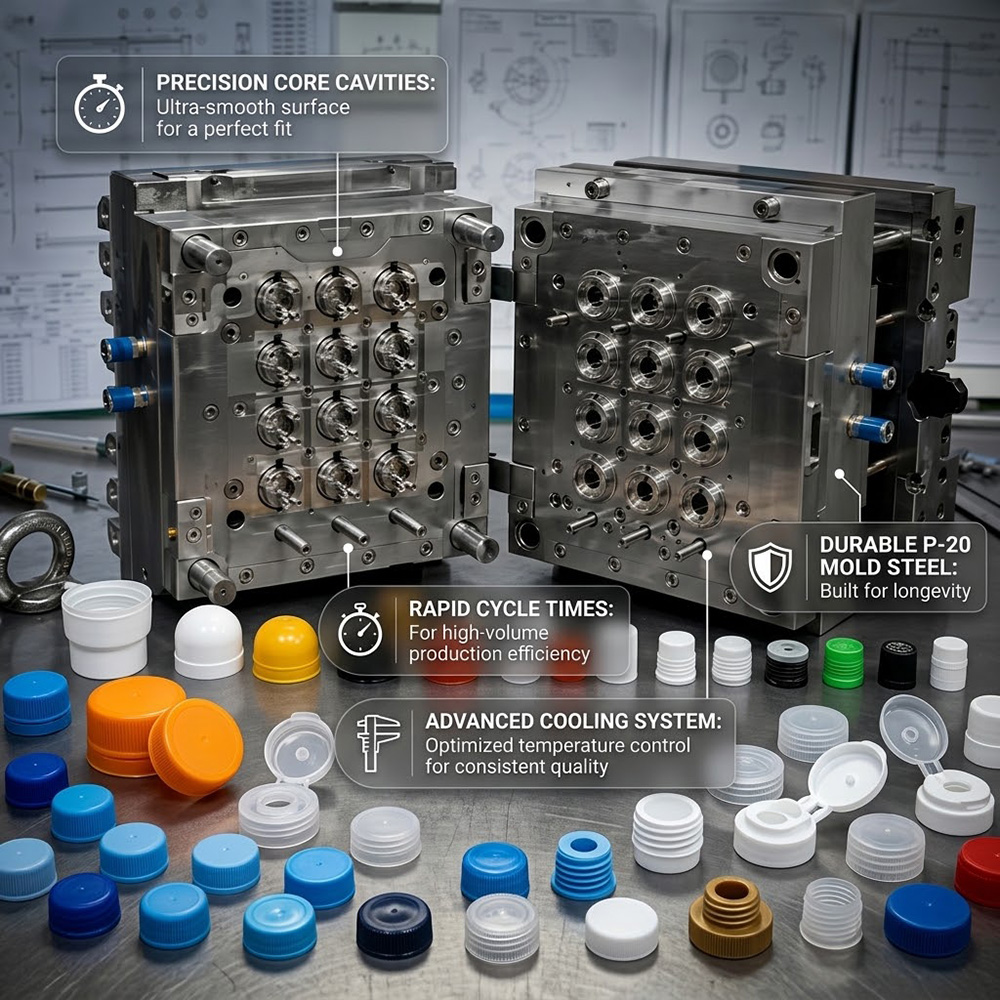
Shuanghao designed a 48-cavity flip-top cap mold with side gating, conformal cooling, and sleeve ejection. Hinge thickness was held to 0.25mm plus or minus 0.02mm across all cavities. Opening force variation was less than 2 Newtons across all cavities. The cap achieved 30,000 flex cycles with no failures.
The Shuanghao Living Hinge Advantage
Shuanghao's specialized solutions for living hinge and flip-top caps deliver optimized hinge geometry with precise thickness control, generous transition radii, and radiused hinge profile. Correct molecular orientation through side gate placement and flow analysis. Impact copolymer PP for maximum fatigue resistance. Proper processing parameters optimized melt temperature, mold temperature, and packing. Comprehensive testing including flex cycling, opening force, and closing force measurement.
Conclusion: Hinges That Last
Living hinges are the most demanding feature in injection molding. A poorly designed hinge fails prematurely. A well-designed hinge lasts millions of cycles.
Shuanghao's specialized solutions for caps with living hinges and flip-tops deliver hinge geometry optimized for durability, molecular orientation across the hinge for strength, material selection for fatigue resistance, processing parameters for consistent performance, and comprehensive testing for validation.
Whether you produce personal care flip-tops, food condiment caps, or industrial dispensing closures, Shuanghao has the living hinge expertise to ensure your caps last.
Choose Shuanghao. Choose living hinges that last.