Case Study: Implementing In-Mold Pressure Monitoring to Reduce Scrap Rate in a 64-Cavity Cap Mold
Case Study: Implementing In-Mold Pressure Monitoring to Reduce Scrap Rate in a 64-Cavity Cap Mold
Published by cap-molds Technical Engineering Team
Introduction: The High-Stakes World of High-Cavity Closure Manufacturing
In high-volume bottle cap manufacturing, operational efficiency is measured in fractions of a second and microscopic dimensional tolerances. For producers deploying 64-cavity or 96-cavity closure molds, maintaining uniform part weight, structural integrity, and zero flash across every single cavity is a massive engineering challenge. Traditional injection molding machines rely solely on nozzle or barrel pressure feedback, which often fails to capture cavity-to-cavity variations caused by melt viscosity fluctuations or runner imbalance.
As a leading specialist in precision closure tooling, cap-molds successfully executed a comprehensive technical upgrade for a major global beverage packaging partner. By integrating piezoelectric cavity pressure sensors and real-time data analytics directly into a 64-cavity cap mold, we eliminated guesswork, slashed scrap rates from 2.8% to under 0.4%, and established a bulletproof Industry 4.0 quality framework.
1. The Core Challenge: Cavity-to-Cavity Discrepancies in 64-Cavity Production
Our client was experiencing sporadic structural defects in high-density polyethylene (HDPE) tamper-evident closures. Common issues included short shots, localized flash, and micro-warpage on the folding bridge. Because standard machine control panels monitor machine-level hydraulic pressure rather than actual conditions inside the mold, operators could not identify which specific cavities were experiencing over-packing or under-filling.
Key pain points prior to the upgrade included:
- Unbalanced Melt Flow: Thermal gradients within the hot runner manifold created inconsistent viscosity across peripheral versus central cavities.
- High Scrap Rates: Random batch rejection rates averaged 2.8%, severely impacting daily output and material efficiency.
- Lack of Traceability: Operators lacked automated verification to detect blocked gates or stuck valves before they produced defective batches.
2. The Engineering Solution: Direct In-Mold Pressure Integration
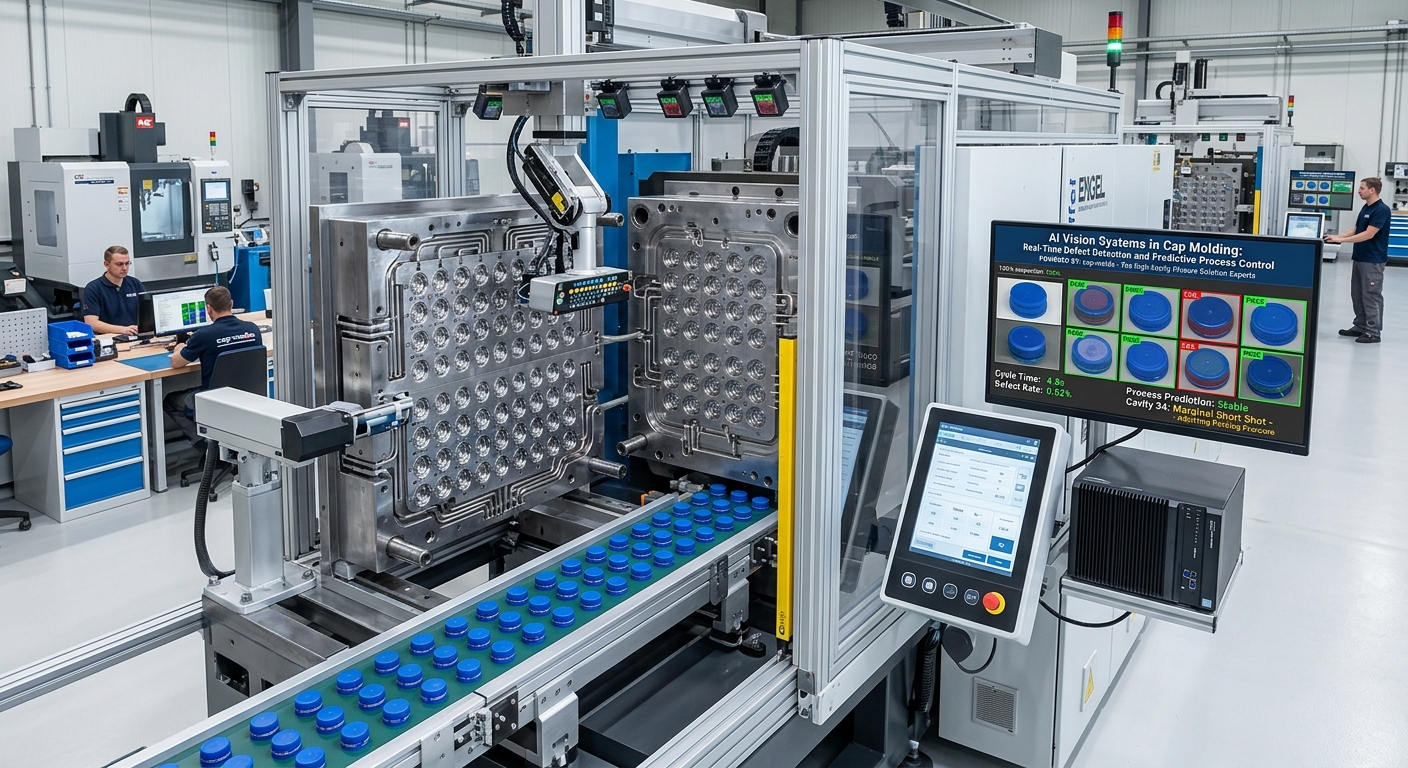
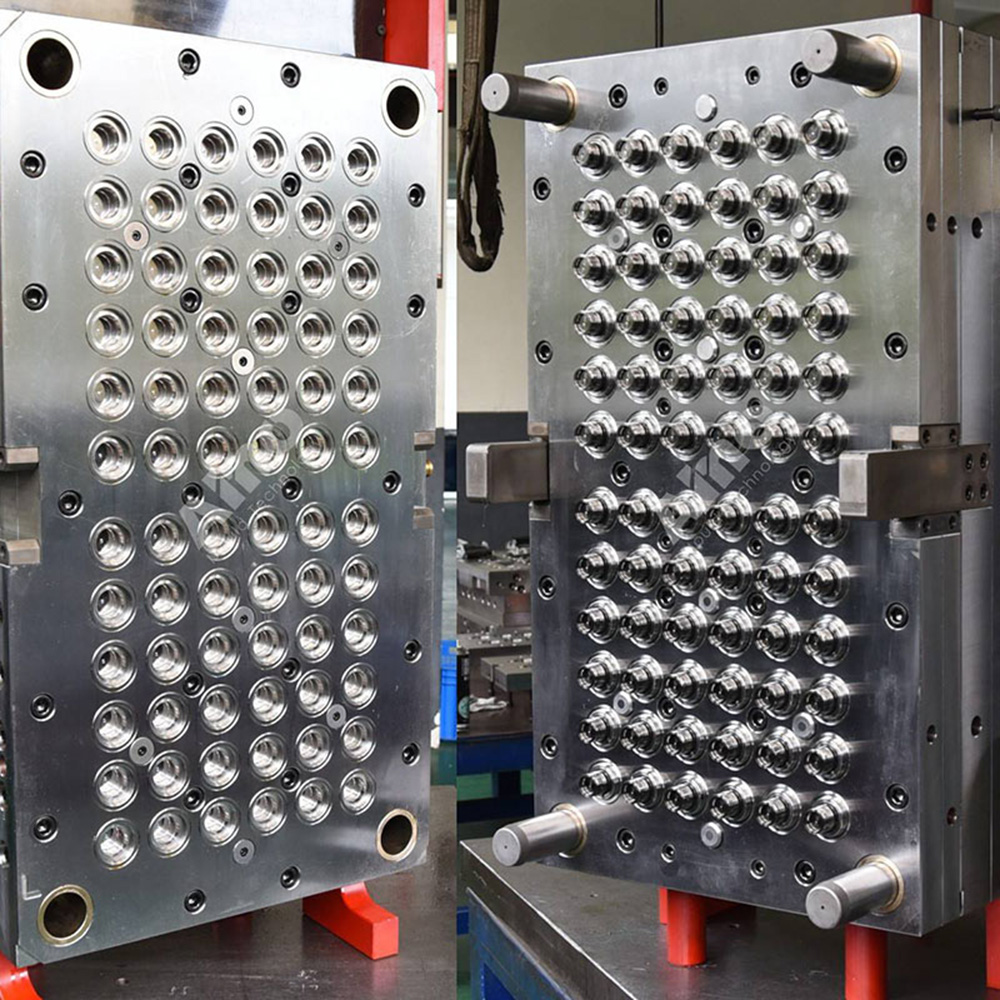
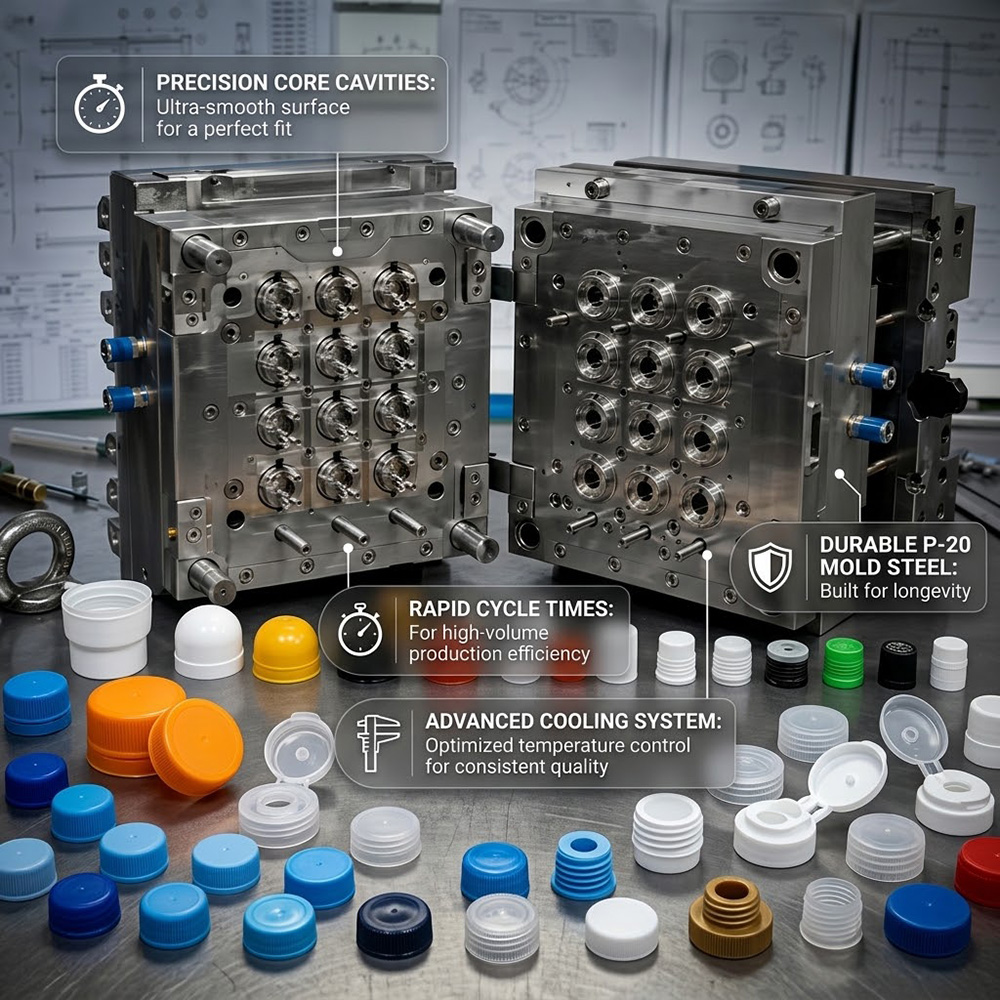
To solve these multi-variable issues, the engineering team at cap-molds redesigned the core-plate architecture of the 64-cavity mold to accommodate high-sensitivity piezoelectric pressure sensors positioned flush behind the cavity walls. This setup tracked dynamic cavity pressure curves in real time.
Implementation steps included:
- Strategic Sensor Placement: Installing miniature sensors at critical filling and packing nodes to map the precise moment of switch-over from injection to holding pressure.
- Closed-Loop Machine Integration: Interfacing sensor signals directly with the injection molding machine's PLC via high-speed data acquisition modules to trigger automatic cavity-specific corrections.
- Threshold Parametrization: Establishing strict upper and lower pressure tolerance envelopes; any cavity exceeding deviation limits triggered an instant automated reject cycle.
3. Measurable Results and OEE Enhancement
The deployment of in-mold pressure monitoring transformed the client's manufacturing line from reactive troubleshooting to predictive process control. Within the first month of continuous operation, the metrics demonstrated remarkable improvements:
- Scrap Rate Reduction: Defective part generation plummeted from 2.8% down to 0.35%, translating to tens of thousands of dollars in annual raw material savings.
- Enhanced OEE: Overall Equipment Effectiveness (OEE) increased by 7.4% due to reduced unplanned downtime and shorter mold setup validation times.
- Dimensional Stability: Closure wall thickness uniformity improved significantly, ensuring flawless cap application performance on high-speed bottling lines.
Conclusion: Partner with cap-molds for Smart Closure Tooling
Integrating Industry 4.0 sensor technologies into high-cavity tooling is no longer optional for competitive packaging producers—it is a necessity. As an industry pioneer, cap-molds continues to engineer intelligent, high-performance closure molds that combine superior steel metallurgy, conformal cooling, and advanced telemetry to maximize your production yield.