How Larger Runners and Gates Improve Moldability of Recycled Plastics in Cap Production
Published by cap-molds — China's Premier Precision Bottle Cap Mold Manufacturer & Sustainable Tooling Engineering Specialist
1. Introduction: Rheological Complexities of Recycled Polyolefins in Closure Molding
As the global beverage packaging industry accelerates the adoption of Post-Consumer Recycled (PCR) HDPE and PP to fulfill regulatory sustainability quotas, molders face significant processing challenges. Unlike virgin resins with consistent Melt Flow Indices (MFI), recycled resins exhibit broader molecular weight distributions, cross-batch viscosity variations, and higher sensitivity to shear-induced thermal degradation.
In high-speed, high-cavitation cap molds, restrictive hot runner channels and narrow gate diameters designed for virgin polyolefins create extreme shear rates ($>10,000 \text{ s}^{-1}$). This elevated shear stress breaks polymer chains, induces severe melt fracture, and causes localized degradation. As an established expert in precision closure tooling, cap-molds re-engineers hot runner manifold sizing and gate geometry to dramatically improve PCR moldability while preserving fast cycle times and structural integrity.
2. Physics of Shear Heating and Pressure Drops in PCR Resins
The flow behavior of non-Newtonian polymer melts through hot runner channels is described by the Hagen-Poiseuille relationship modified for power-law fluids. The shear rate ($\dot{\gamma}$) at the channel wall is inversely proportional to the cube of the radius ($r^3$):
$$\dot{\gamma} = \frac{4Q}{\pi r^3}$$
When processing PCR materials, restricting flow through small gate tips causes an exponential rise in shear rate and frictional heat. This leads to several compounding injection defects:
- Melt Degradation and Discoloration: Overheating inside narrow gate orifices burns degraded PCR fractions, generating black specks, acrid off-gassing, and loss of mechanical ductility.
- Gate Vestige Stringing & Drooling: Shear-thinned recycled resins fail to freeze off sharply in tiny thermal tips, leading to stringing along cap top decks.
- Excessive Injection Pressure Requirements: Unbalanced pressure drops across restrictive runners force presses to operate near maximum injection pressure limits, increasing energy consumption and mold plate deflection.
3. Tooling Engineering Solutions: The cap-molds Approach
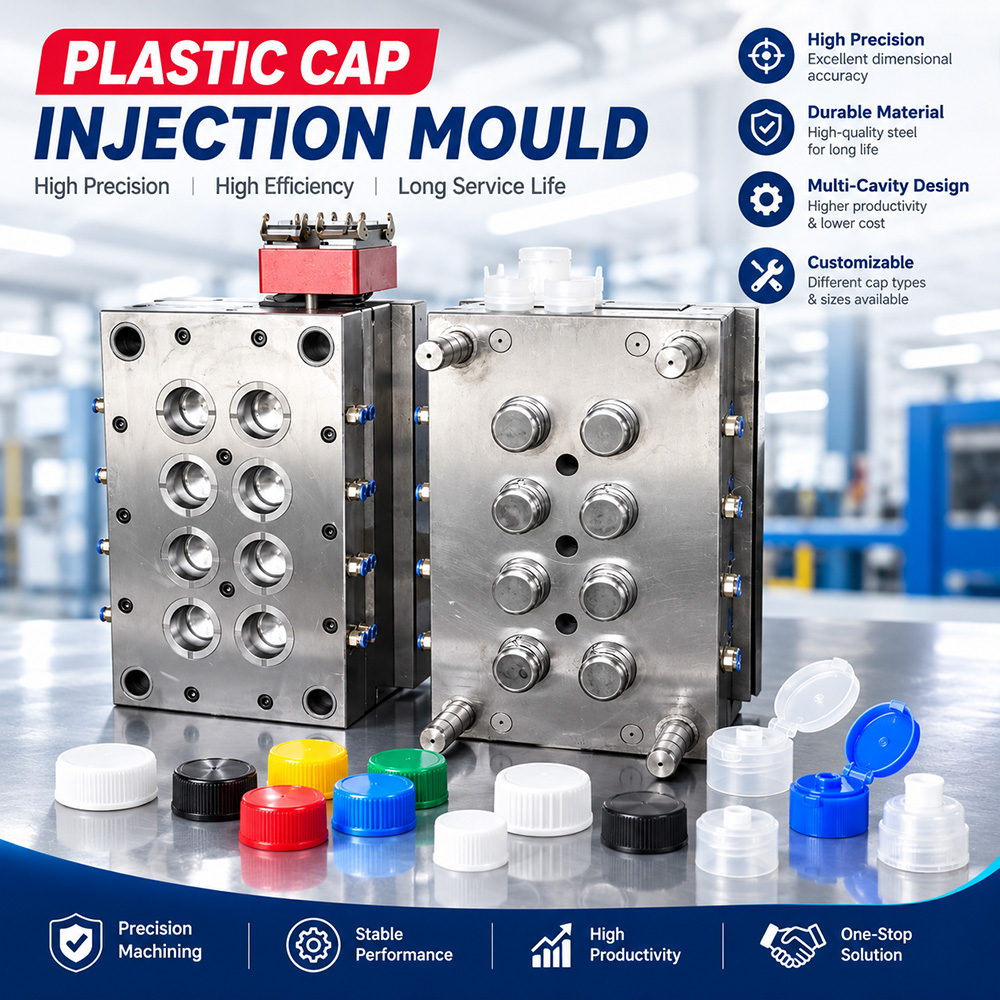
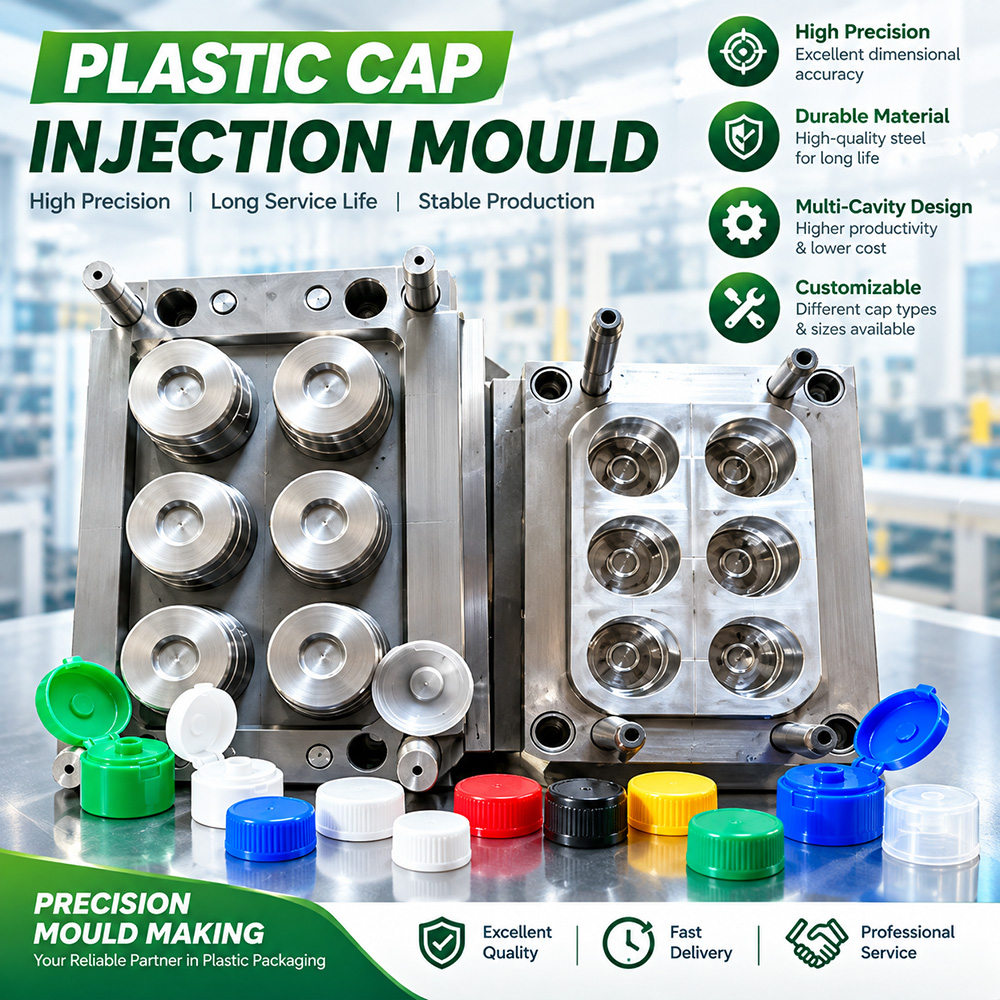
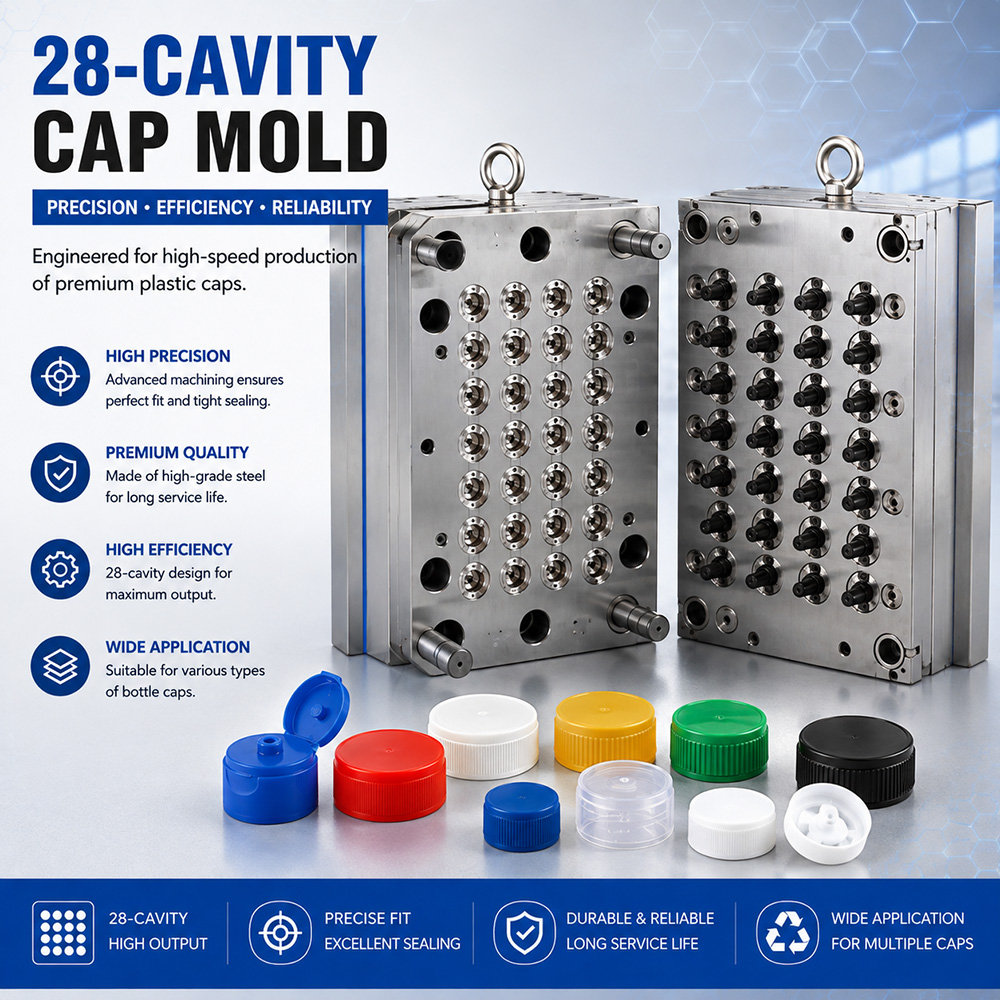
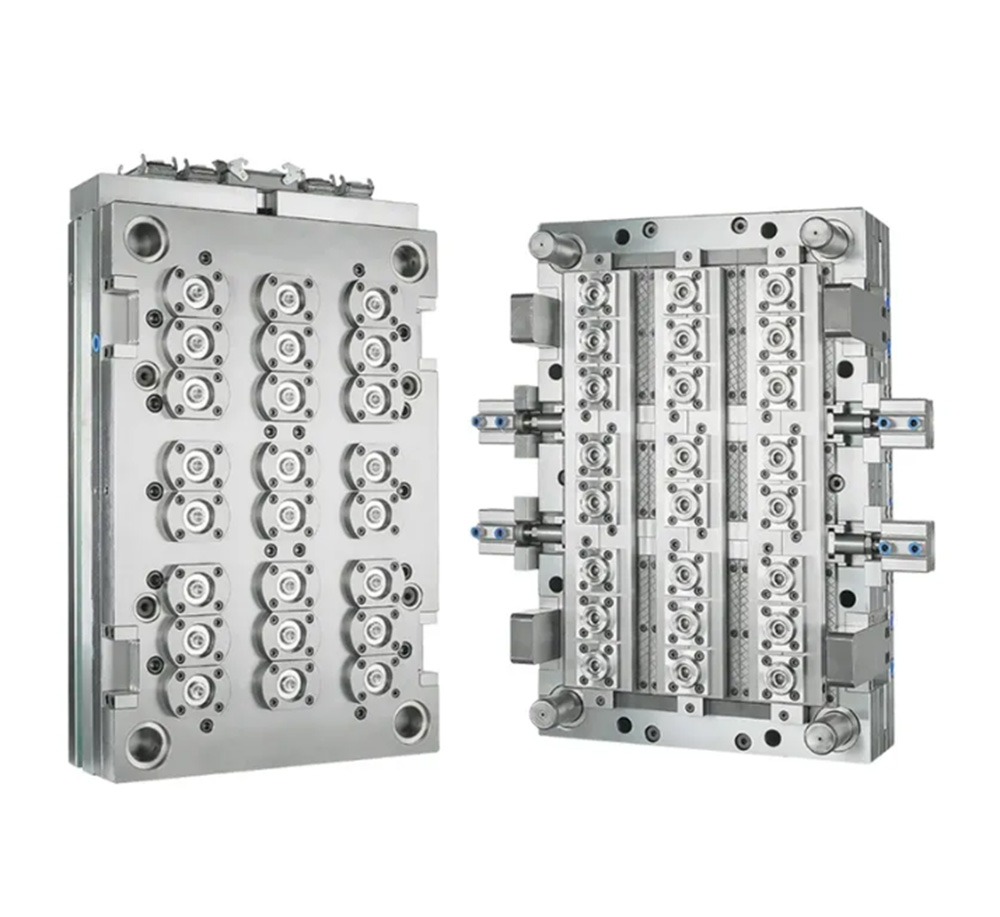
To optimize the processing window for PCR-HDPE and rPP blends without increasing cycle times, cap-molds implements scaled runner diameters and enlarged valve gate orifices paired with precision needle valve actuation.
| Hot Runner Engineering Feature | Standard Virgin Cap Tooling Design | cap-molds PCR-Optimized Tooling Architecture |
|---|---|---|
| Main Manifold Channel Diameter | Ø 6.0mm – Ø 8.0mm | Ø 9.5mm – Ø 12.0mm (40% reduction in shear stress) |
| Gate Orifice Diameter | Ø 0.8mm – Ø 1.2mm | Ø 1.5mm – Ø 2.0mm with needle valve shut-off |
| Peak Shear Rate at Gate | > 12,000 s⁻¹ | Constrained below 4,500 s⁻¹ |
| Hydraulic Pressure Drop ($\Delta P$) | High (1,400 – 1,750 bar) | Optimized Low (850 – 1,100 bar) |
4. Balancing Larger Gates with Fast Cycle Demands
A common concern among closure manufacturers is that increasing gate diameters will prolong gate cooling time, thereby extending overall cycle times. cap-molds solves this trade-off through advanced mechanical and thermal integration:
- Positive Valve Pin Shut-Off: Utilizing individual pneumatic or hydraulic valve gates allows the pin to mechanically seal a large Ø1.8mm orifice instantly upon cavity fill. This decouples gate closure from thermal freeze-off time, maintaining cycles under 3.5 seconds.
- Zero-Vestige Surface Finish: Mechanical pin closure ensures that despite the larger gate diameter, the cap top deck remains completely flush with zero protruding material or stringing.
- Micro-Conformal Gate Cooling Loops: Integrating 3D-printed DMLS conformal cooling channels around the valve gate bushing rapidly removes heat from the larger gate area, preventing localized thermal sink marks.
5. Strategic Benefits for Sustainable Closure Producers
Adopting larger runner and gate architectures engineered by cap-molds provides clear production and financial advantages for packaging operations:
- Expanded Material Operating Window: Seamlessly process wide variations in PCR Melt Flow Index (from 0.8 to 8.0 g/10min) without requiring tool modifications or risking short shots.
- 30% Lower Injection Pressure: Reduced hydraulic resistance minimizes machine tonnage requirements, lowering energy consumption and extending mold base lifespan.
- Preserved Mechanical Integrity: Minimizing polymer chain degradation ensures caps pass strict ESCR (Environmental Stress Crack Resistance) and drop-impact tests.
Partner with cap-molds for Advanced Sustainable Tooling
At cap-molds, we combine state-of-the-art rheological simulation, DMLS 3D metal printing, and sub-micron Swiss CNC machining. Whether you are running 25%, 50%, or 100% PCR HDPE/PP for beverage, household chemical, or personal care closures, our technical engineering team delivers custom high-cavitation tools engineered for speed, stability, and maximum profitability.