Tethered Cap Mold Engineering: Tether Strap Retention, Opening Angle, and EU Directive Compliance
Tethered Cap Mold Engineering: Tether Strap Retention, Opening Angle, and EU Directive Compliance
The global packaging industry is undergoing a monumental shift driven by environmental regulations and sustainability mandates. Among these, the European Union Single-Use Plastics (SUP) Directive has made tethered closures a mandatory requirement for beverage containers. For brand owners and packaging manufacturers, transitioning to tethered caps presents significant engineering challenges. At Cap-Molds, as a premier specialized cap mold manufacturer, we understand that achieving seamless compliance requires advanced mold engineering, precise thermal balance, and robust mechanical design.
This technical whitepaper explores the critical engineering parameters involved in designing high-performance tethered cap molds, focusing on strap retention force, optimal opening angles, and full regulatory compliance.
1. The Regulatory Landscape: Understanding the EU SUP Directive
The EU Directive 2019/904 mandates that beverage containers up to 3 liters must have their caps stay attached to the container throughout the product's intended use stage. This requirement aims to eliminate littering by ensuring that caps are collected alongside bottles. However, compliance introduces stringent technical demands on the closure and, more importantly, the injection mold tooling:
- Durability: The tether strap must withstand repeated opening and closing cycles without breaking or fatiguing.
- Consumer Experience: The cap must remain out of the way during drinking or pouring, requiring a precise hinge design and opening angle.
- Interoperability: The closure must fit existing neck finishes (such as 1881, 2925, or PCO variants) without leaking or requiring neck design overhauls.
2. Critical Mold Engineering Parameters for Tethered Caps
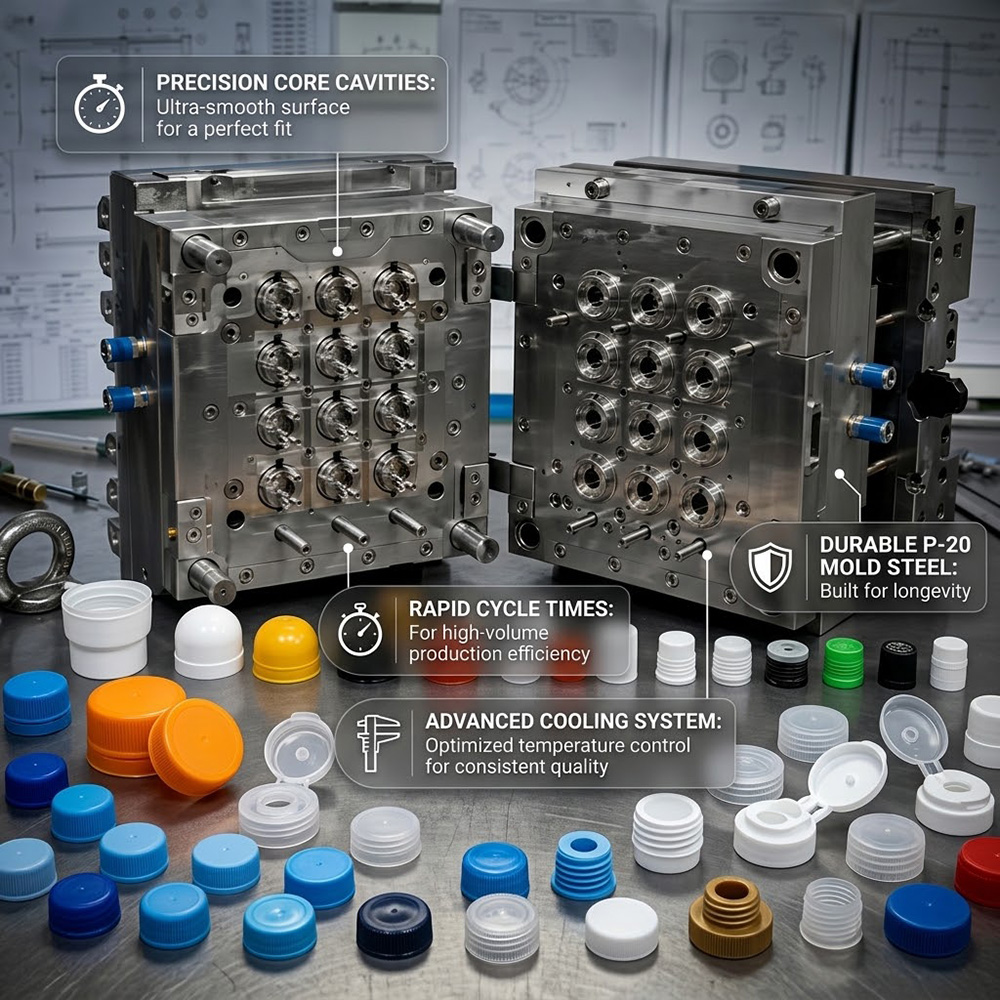
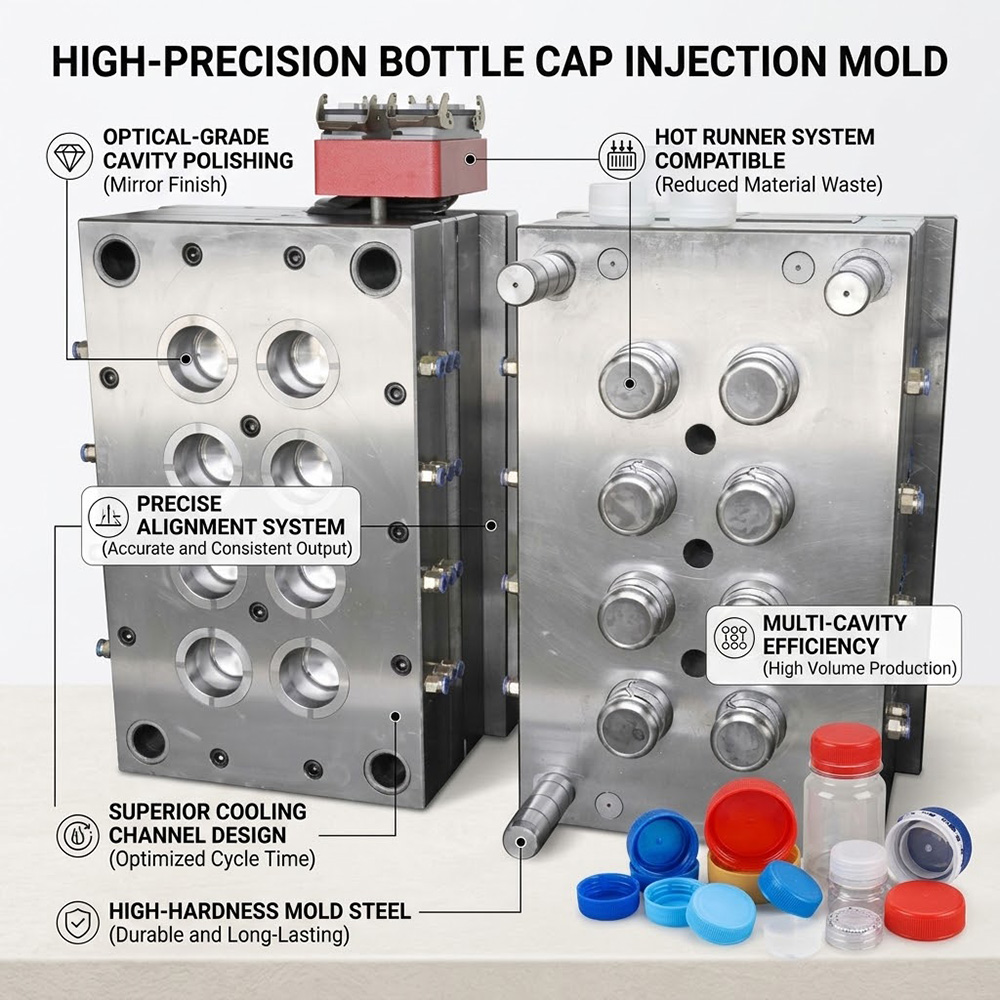
Manufacturing tethered caps requires high-cavity precision injection molds with complex action mechanisms. Standard cap molds are insufficient for handling the intricate undercuts and hinge structures required by tethered designs. Here is how advanced mold engineering addresses these challenges:
Tether Strap Retention Force and Tensile Integrity
The tether strap acts as the physical lifeline connecting the cap to the tamper-evident band. During opening, consumers apply varying degrees of pull force. If the strap is too thin, it snaps prematurely; if it is too thick, opening the bottle becomes awkward.
- Mold Flow Optimization: Advanced Moldflow analysis is utilized during the mold design phase to ensure balanced resin distribution across high-cavity layouts (e.g., 48, 72, or 96 cavities). This prevents localized weak spots or internal stresses in the strap region.
- Tight Tolerancing: Our tooling achieves micron-level precision, ensuring consistent cross-sectional thickness of the strap across every single cavity, guaranteeing uniform retention force (typically optimized between 15N to 25N).
Achieving the Optimal Opening Angle (>180 Degrees)
A major consumer pain point with poorly designed tethered caps is spring-back interference—where the cap flops back into the path of the stream during drinking. Precision mold engineering solves this through specialized hinge geometry:
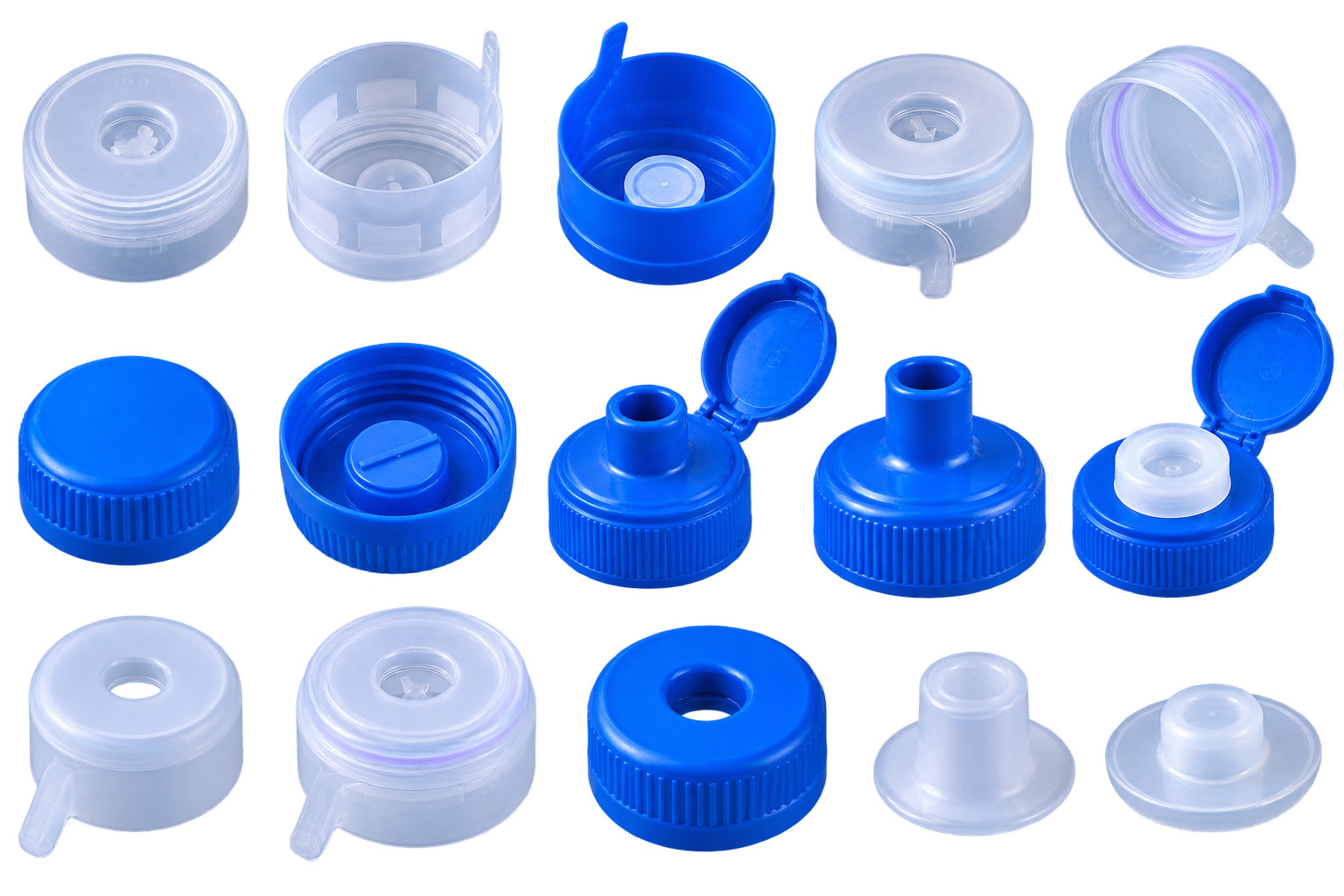
- Hinge Undercut Design: Cap-molds integrates custom slider mechanisms and collapsible core configurations that shape the living hinge or bridge mechanisms precisely.
- Locking Bi-Stable Hinge Action: Our molds are engineered to create a bi-stable hinge behavior, allowing the cap to lock securely in an open position exceeding 180 degrees, ensuring completely unobstructed consumption.
3. Material Selection and Thermal Balance in High-Cavity Molds
Cycle time and dimensional stability dictate the ROI of any high-cavity cap mold project. In tethered cap manufacturing, thermal control is even more critical due to thin-walled sections and complex slider cooling:
- High-Grade Mold Steel: We utilize premium pre-hardened stainless steel (such as DIN 1.2316 or specialized beryllium copper inserts in hot spots) to resist corrosion, ensure high thermal conductivity, and extend mold life beyond millions of cycles.
- Conformal and Balanced Cooling Channels: Optimized cooling layouts integrated directly into the core and cavity plates drastically reduce cycle times, minimizing warpage and ensuring flawless demolding of the tether strap features.
4. Why Partner with Cap-Molds?
Transitioning your product line to meet global sustainability standards requires a manufacturing partner with deep domain expertise in closure tooling. At Cap-Molds, we deliver turnkey solutions from initial part design and Moldflow simulation to high-precision machining, rigorous trial testing, and global technical support.
By leveraging state-of-the-art CNC machining centers, high-speed EDM, and CMM inspection systems, we ensure that every mold delivered meets exact specifications, helping you achieve lower cost-per-part, faster cycle times, and complete regulatory peace of mind.