Top 10 Common Defects in Plastic Cap Molding and How Precision Mold Design Prevents Them
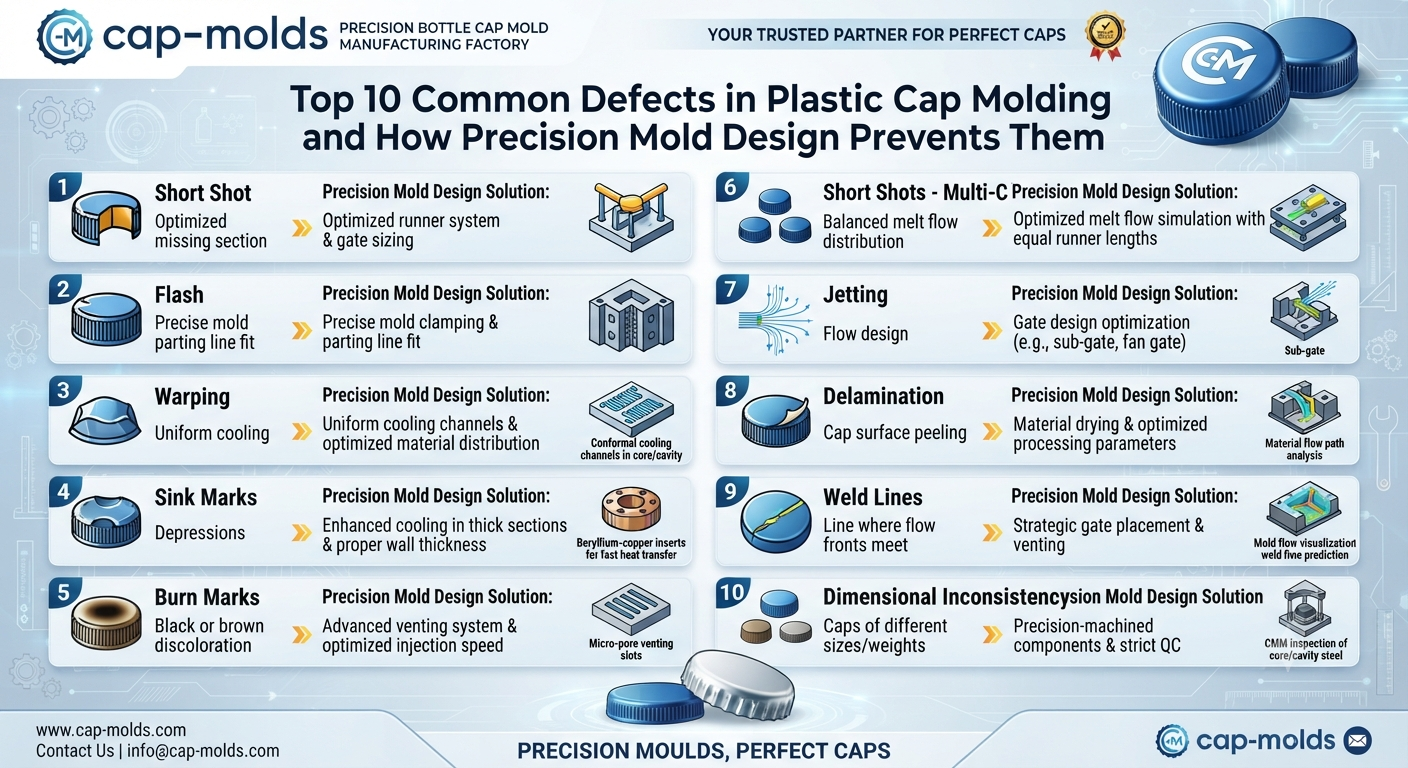
Top 10 Common Defects in Plastic Cap Molding and How Precision Mold Design Prevents Them
In high-speed plastic packaging and closure manufacturing, even a microscopic deviation in mold geometry can result in millions of defective parts, costly production downtime, and severe supply chain delays. Bottle caps—ranging from lightweight still water closures and high-pressure carbonated soft drink (CSD) caps to complex flip-top cosmetic dispensers—demand absolute perfection in sealing integrity, thread precision, and structural strength.
As a leading Chinese engineering and manufacturing specialist in high-performance closure tooling, .cap-molds approaches mold design with a zero-defect philosophy. In this technical whitepaper, our engineering team breaks down the top 10 common injection molding defects associated with plastic caps and explains how advanced mold architecture, material selection, and thermal optimization completely eliminate them at the root.
1. Flash and Burrs
- The Defect: Excess plastic material squeezing out along the parting line, core-cavity interfaces, or ejector pin holes, causing sharp edges and jamming capping machinery.
- Root Cause: Insufficient clamping force, worn parting surfaces, or improper parting line venting causing over-packing.
- How .cap-molds Prevents It: We utilize ultra-rigid pre-hardened mold bases and precision CNC machining to achieve micro-inch parting line contact tolerances within ±0.005mm, combined with engineered venting channels that eliminate air pockets without allowing polymer bypass.
2. Short Shots
- The Defect: Incomplete filling of the cap cavity, resulting in missing skirt sections, truncated threads, or incomplete tamper-evident bands.
- Root Cause: Inadequate injection pressure, restricted melt flow, cold runner thermal drop, or improper gate sizing.
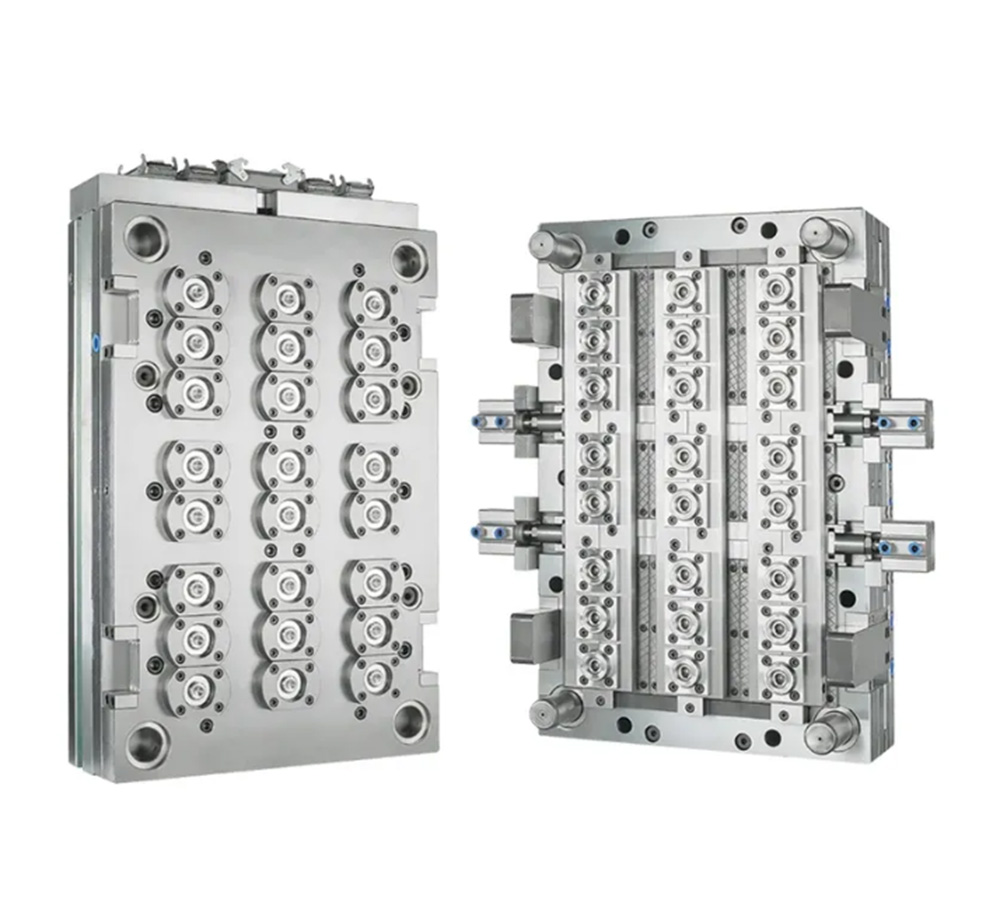
- How .cap-molds Prevents It: Our engineering team conducts rigorous pre-production Moldflow simulations to map optimal gate locations and wall thickness transitions. We implement naturally balanced hot runner manifolds that ensure uniform melt delivery to every cavity simultaneously.
3. Warpage and Out-of-Roundness
- The Defect: The cylindrical cap body deforms into an elliptical or distorted shape upon cooling, failing leak-tests on automated bottling lines.
- Root Cause: Non-uniform volumetric shrinkage caused by uneven thermal dissipation across variable wall thicknesses (e.g., thick thread bands vs. thin skirts).
- How .cap-molds Prevents It: We integrate strategic Beryllium Copper (BeCu) inserts in high-heat core tips alongside 3D conformal cooling channels that trace the exact geometry of the cap, ensuring rapid, uniform heat extraction.
4. Sink Marks and Voids
- The Defect: Localized surface depressions or internal micro-voids occurring in thicker structural areas, such as the top dome or hinge anchor points of flip-top caps.
- Root Cause: Inadequate packing pressure, premature gate freezing, or excessive melt temperature.
- How .cap-molds Prevents It: We optimize gate dimensions and runner diameter ratios to maintain pressure transmission through the holding phase, allowing adequate material compensation during volumetric shrinkage.
5. Thread Damage and Stripping Failure
- The Defect: Internal threads are sheared, deformed, or stripped during the mold opening and unscrewing cycle.
- Root Cause: Premature mold opening before complete polymer solidification, uncalibrated rotational speed of the unscrewing mechanism, or improper thread draft angles.
- How .cap-molds Prevents It: Our proprietary rotary unscrewing systems utilize high-precision nitrided gear transmissions with synchronized electronic cam controls, paired with polished S136 stainless steel core inserts that minimize frictional drag.
6. Burn Marks and Diesel Effect
- The Defect: Dark brown or black discoloration on the cap surface, accompanied by localized polymer degradation and material burning.
- Root Cause: Trapped air being compressed so rapidly at dead ends that it superheats and scorches the surrounding plastic.
- How .cap-molds Prevents It: We engineer precision split-line venting inserts and vacuum-assisted air evacuation paths at every critical filling termination point, completely neutralizing compression heating.
7. Delamination and Surface Peeling
- The Defect: The outer layer of the plastic cap peels away in thin sheets, destroying the mechanical strength and visual finish.
- Root Cause: Polymer contamination, excessive moisture in the resin, or high shear stress induced by restrictive gate designs.
- How .cap-molds Prevents It: By engineering high-flow runner configurations and applying smooth, polished micro-finishes to all cavity walls, we minimize shear rate spikes during high-speed injection.
8. Ejection Pin Marks and Stress Cracking
- The Defect: Deep indentations, stress whitening, or structural punctures caused by high ejection resistance against the delicate cap skirt.
- Root Cause: Insufficient draft angles, unbalanced ejection force, or sticking cores due to rough surface finishes.
- How .cap-molds Prevents It: We utilize advanced stripper-ring ejection mechanisms that distribute stripping force uniformly across the entire base of the cap rather than relying solely on localized pin pushers.
9. Weld Line Weakness
- The Defect: Structural lines where separate melt fronts converge, resulting in weak mechanical zones prone to splitting under capping torque.
- Root Cause: Improper gate placement forcing cold melt fronts to collide at disadvantageous angles.
- How .cap-molds Prevents It: Using advanced simulation software during the DFM (Design for Manufacturing) phase, .cap-molds relocates weld lines away from high-stress structural areas like hinges and tamper bands.
10. Dimensional Inconsistency Across Cavities
- The Defect: Caps produced in Cavity A do not match the tolerances of Caps produced in Cavity B within a multi-cavity production mold.
- Root Cause: Inconsistent thermal distribution in the mold base or non-uniform machining tolerances across cavity inserts.
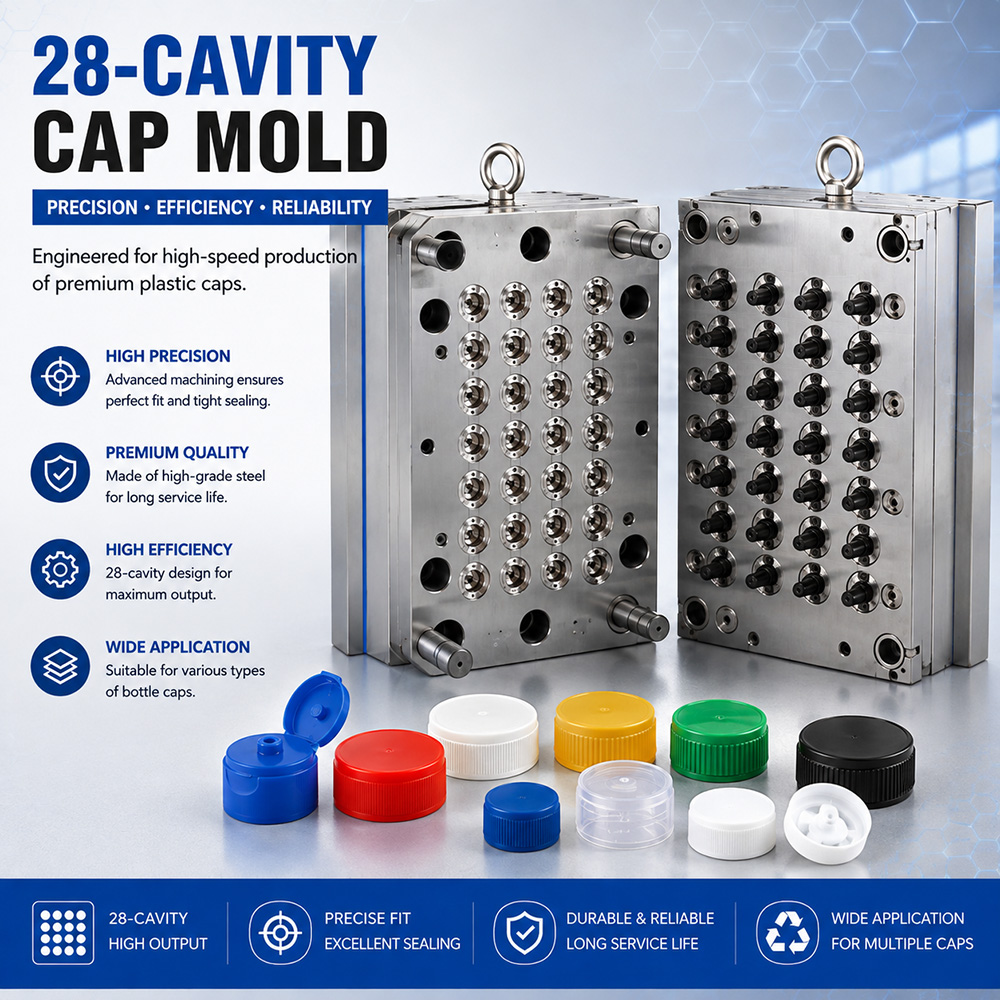
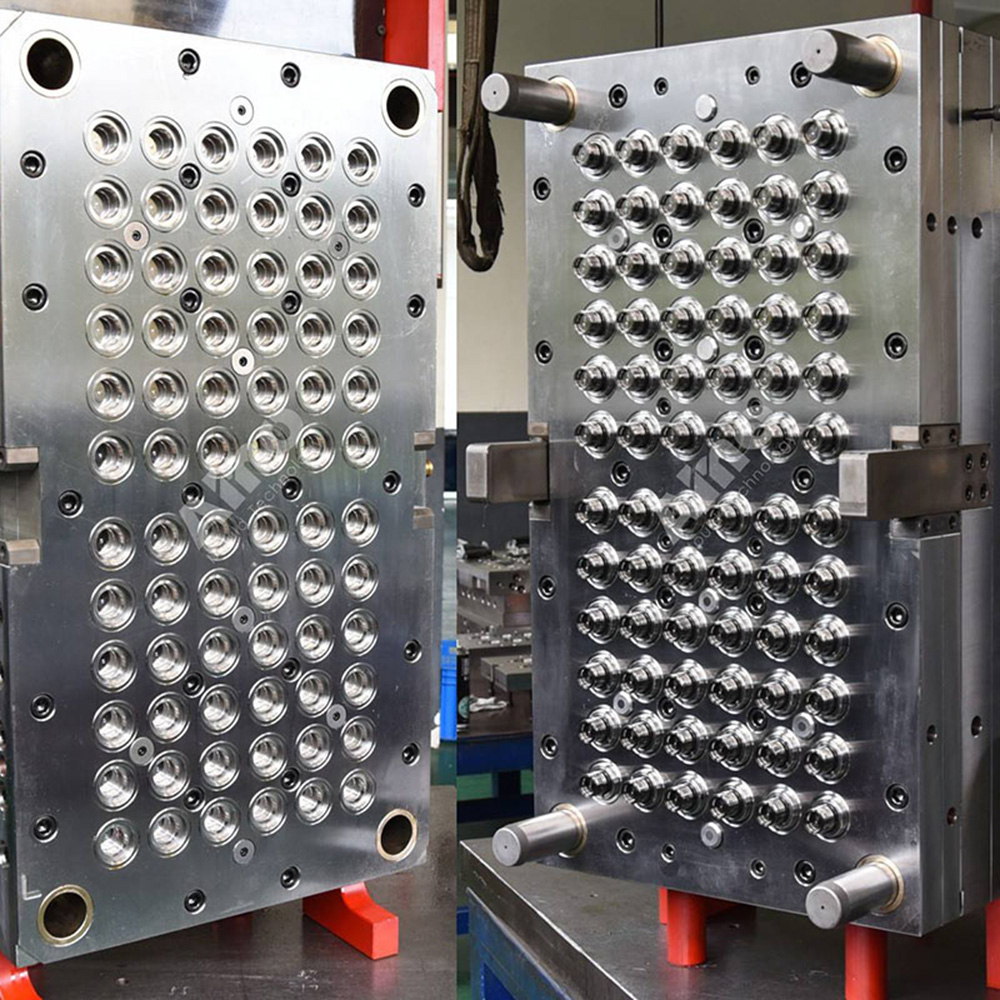
- How .cap-molds Prevents It: Operating state-of-the-art Japanese and Swiss CNC machinery (Makino, Yasda, Charmilles), we guarantee absolute cavity interchangeability within a strict tolerance window of ±0.005mm.
Why Partner with .cap-molds?
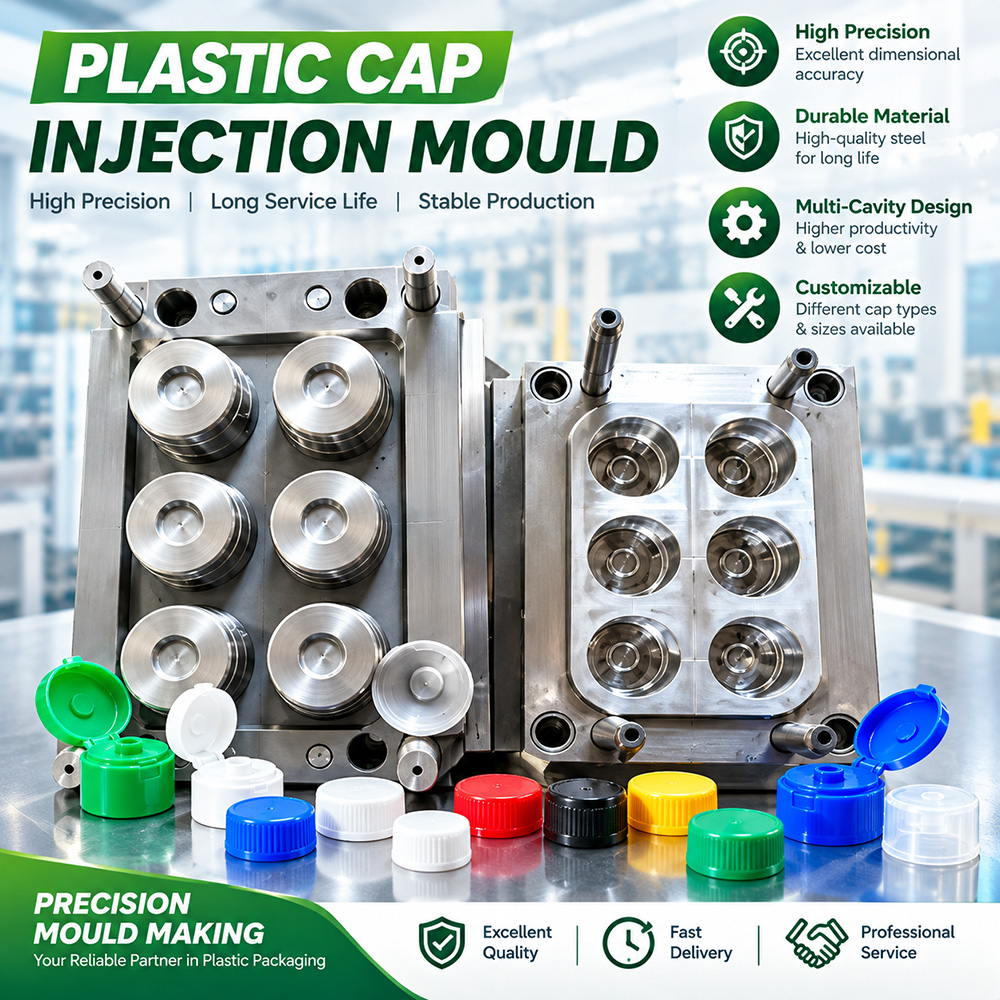
Eliminating defects in bottle cap manufacturing requires more than just a standard injection mold; it requires deep engineering expertise, elite tool steels (such as Swedish S136 hardened to HRC 48-52), and a relentless commitment to precision. As an industry-leading Chinese cap mold manufacturer, .cap-molds delivers turnkey tooling solutions engineered for millions of high-speed, defect-free cycles.
Ready to upgrade your production yield and eliminate costly closure defects? Contact the engineering experts at .cap-molds today to review your part drawings and request a comprehensive DFM analysis.
Keywords: bottle cap mold, cap injection mold, .cap-molds, injection molding defects, cap mold design, high cavitation mold, flash prevention in molds, warped cap prevention, rotary unscrewing mold, China cap mold manufacturer, plastic closure tooling, hot runner mold system, mold cooling optimization, precision cap tooling